
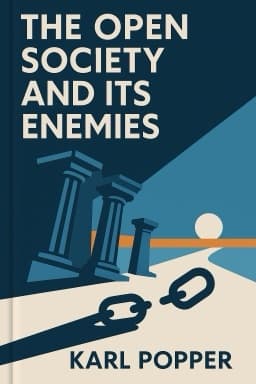
The Hidden Blueprint of Totalitarianism: What Karl Popper’s Masterpiece Reveals About Power and Control
An eye-opening analysis of how historicist philosophy lays the groundwork for authoritarian regimes.

Behind every authoritarian regime lies a story — often a philosophical justification claiming that history or nature demands their rule. Karl Popper’s The Open Society and Its Enemies uncovers this hidden blueprint of totalitarianism rooted in historicist philosophy.
Plato’s ideal state, with its rigid class hierarchy and justice defined as obedience to assigned roles, exemplifies how political philosophy can be weaponized to legitimize oppression. Popper illuminates how Plato’s attack on individualism and embrace of collectivism provide the ideological foundation for authoritarian control.
Historicism’s claim that history follows inevitable laws discourages critical inquiry and empowers rulers to claim their authority as historically necessary. Popper counters this with the concept of the open society — a pluralistic, democratic community where laws and norms are subject to ongoing criticism and reform.
This blog offers a compelling analysis of the philosophical roots of political tyranny and the vital role of open societies in safeguarding freedom. It is essential reading for anyone seeking to understand the interplay between ideas and power.
Further reading and reviews can be found on Complete Review, Wikipedia, JSTOR, and political think tank publications.
Want to explore more insights from this book?
Read the full book summary