
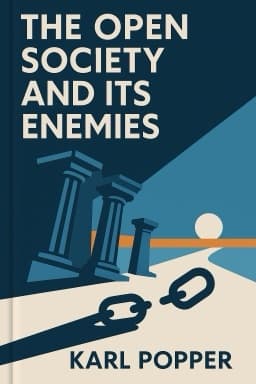
Why Karl Popper’s ‘The Open Society and Its Enemies’ Is More Relevant Than Ever in the Age of Authoritarianism
Explore how Popper’s warnings about historicism and totalitarianism resonate powerfully in today’s global political climate.

As the world grapples with the resurgence of authoritarianism, Karl Popper’s The Open Society and Its Enemies emerges as a vital text illuminating the philosophical underpinnings of political repression. Popper’s profound critique of historicism reveals how the belief in predetermined historical laws can be weaponized to justify the suppression of dissent and the erosion of democratic freedoms.
Popper traces the lineage of these ideas back to Plato, whose vision of a perfect, unchanging state relies on rigid class hierarchies and the subordination of the individual to the collective. This collectivism, Popper warns, leads to totalitarianism, where the state’s interests override personal freedoms and critical inquiry is stifled.
In today’s political landscape, echoes of these historicist doctrines can be seen in regimes that claim to embody historical necessity or national destiny, often suppressing pluralism and democratic institutions. Popper’s advocacy for an open society — one that embraces critical rationalism, democratic governance, and individual rights — offers a blueprint for resisting these threats.
This blog also discusses the importance of piecemeal social engineering, a pragmatic approach to reform that acknowledges human fallibility and avoids utopian grand designs. By fostering open debate and incremental change, societies can better navigate complexity and prevent the slide into authoritarianism.
Readers will find valuable insights into how Popper’s philosophy informs contemporary struggles for freedom and democracy, underscoring the urgent need to defend open societies against their enemies.
For further study, refer to authoritative reviews and academic resources including the Complete Review, Wikipedia entries, and scholarly articles on JSTOR.
Want to explore more insights from this book?
Read the full book summary