
Why the Myers-Briggs Test Is Everywhere—And Why That Should Make You Think Twice
The Seductive Power and Hidden Dangers of Typing Ourselves

The Seductive Power and Hidden Dangers of Typing Ourselves
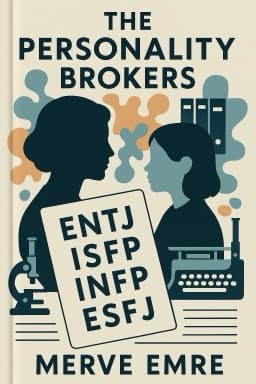
There’s a good chance you know your MBTI type—maybe you even put it on your dating profile or LinkedIn. But have you ever wondered where this four-letter code comes from, or whether it actually means anything? Merve Emre’s The Personality Brokers pulls back the curtain on the MBTI’s unlikely origins and explosive growth, revealing a story that’s as much about hope and belonging as it is about science.
Emre shows how the MBTI was born not in a university lab, but in the living room of two women with no formal training in psychology. Their invention caught fire, spreading from homes to Fortune 500 companies and the U.S. military. Today, the MBTI is a billion-dollar business, with millions taking the test each year. But here’s the catch: most psychologists agree it’s not scientifically reliable. Studies show people often get different results on different days, and the test fails to predict job performance or relationship success.
So why do we love it? The MBTI offers gentle, flattering feedback—never telling you that you’re broken, only that you’re unique. It gives us a language for talking about ourselves and others, a sense of order in a chaotic world. But as Emre and other critics point out, this comfort comes at a cost. By reducing personality to simple categories, the MBTI can reinforce stereotypes and limit our sense of possibility. It’s a mirror that flatters, not a microscope that reveals.
In the end, ‘The Personality Brokers’ challenges us to look beyond the box. The MBTI’s story is a cautionary tale about the seductive power of classification—and a reminder that true self-knowledge is messier, richer, and more rewarding than any test can capture.
References: The New Republic, Psychology Today, Slate
Want to explore more insights from this book?
Read the full book summary