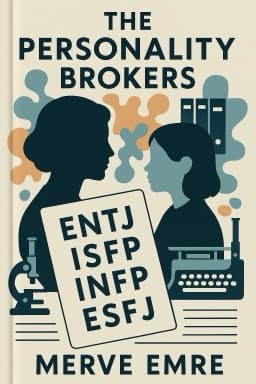
Let me invite you into a sunlit parlor, where the air hums not with idle chatter, but with the quiet, determined energy of a mother intent on decoding the mysteries of the human soul. Here, in the home of Katharine Cook Briggs, the seeds of what would become the Myers-Briggs Type Indicator were sown—not in the sterile halls of a university, but in the lived-in warmth of a family home. As the outside world debated the merits of science and religion, Katharine turned her gaze inward, transforming her living room into a 'cosmic laboratory.' She believed that the secrets of personality could be uncovered not by experts in distant towers, but by the loving, attentive observation of a mother for her child.
With her daughter Isabel as her first and most precious subject, Katharine kept detailed diaries, charting every quirk, every preference, every moment of obedience and curiosity. She devised forced-choice questionnaires—simple, yet profound tools that asked mothers to weigh their children’s traits: was the child placid or intense, imaginative or observant, affectionate or reserved? These early experiments, shared with neighbors and friends, began to reveal patterns, preferences, and the tantalizing possibility that personality could be both shaped and measured.
But this was more than science—it was a deeply personal quest, a mother’s attempt to ensure her daughter’s happiness and success in a world that often seemed indifferent to the inner life. Through drills and stories, rewards and discipline, Katharine sought to instill in Isabel the traits she believed would lead to a 'civilized adulthood.' Her methods were rigorous, sometimes controversial, always driven by love and an unshakable belief in the power of nurture.
What began as a family experiment would, in time, ripple outward—touching the lives of neighbors, then communities, and eventually, the world. The living room laboratory stands as a testament to the idea that great revolutions often begin in the most ordinary of places, fueled by the extraordinary conviction of those who dare to look closer.
As we leave this room, the story expands, moving from the intimate to the intellectual, as the search for understanding leads Katharine to the writings of a Swiss psychologist whose ideas would transform her project forever. Let’s follow that journey, as the homegrown science of personality meets the towering theories of Carl Jung.