
The Secret Life of Art: What Dorian Gray Teaches Us About Creativity and Responsibility
Unmasking the Dark Side of Inspiration

Unmasking the Dark Side of Inspiration
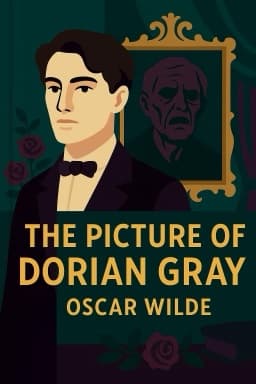
When Basil Hallward paints Dorian Gray, he pours his soul into the canvas. The result is a work of breathtaking beauty—and unspeakable power. Wilde’s novel asks us to reconsider everything we believe about art: Is it merely for pleasure, or does it carry a deeper, sometimes darker, responsibility?
Wilde’s preface famously declares that 'all art is quite useless,' a rallying cry for aestheticism. But the story quickly complicates this idea. The portrait becomes a living record of Dorian’s soul, reflecting not just his beauty but his moral decay.
This duality is at the heart of the novel. Art can inspire, uplift, and immortalize—but it can also reveal, judge, and condemn. Basil’s love for Dorian is innocent at first, but the act of creation unleashes forces he cannot control. Dorian’s descent into corruption is mirrored in the portrait, making art both witness and accomplice. 1 4
Are artists responsible for what their work inspires? Wilde leaves the question open, but his story suggests that creation is never without consequence. The artist, like the reader, must face the truth of what has been made. Today, as art and media shape our world, this lesson is more urgent than ever.
Ultimately, Wilde’s novel is a meditation on the power and peril of creativity. To create is to risk—to reveal parts of ourselves we may not fully understand. But it is also to hope: that our art, like Basil’s, might capture something eternal, beautiful, and true.
Conclusion: The Artist’s Dilemma
Art is never just decoration. It is a mirror, a memory, a challenge. The secret life of art is the life of the soul—brilliant, flawed, and always reaching for meaning. 1 4
Want to explore more insights from this book?
Read the full book summary