Oscar Wilde
A Gothic tale of beauty, corruption, and the cost of living without conscience.
The novel was used as evidence against Oscar Wilde in his infamous 1895 trials.
Section 1
8 Sections
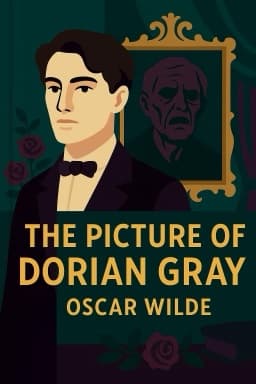
Imagine a room filled with the heady scent of roses and the golden light of a summer afternoon, where art and life are about to collide in a way that will change everything. This is where our journey begins, in a painter’s studio, with a young man whose beauty seems almost too perfect for the world. The artist, Basil Hallward, gazes upon his creation—a portrait so lifelike, so radiant, that it feels as if the very soul of youth has been captured in oil and canvas.
What does it mean to create something beautiful? Wilde, through his now-famous preface, whispers that art should exist for its own sake, unburdened by the weight of morality or purpose. He tells us that 'the artist is the creator of beautiful things,' and that those who seek ugly meanings in beauty are themselves corrupted. This philosophy, radical for its time, invites us to look at the portrait not as a lesson or a warning, but as a celebration of youth, of possibility, of the fleeting nature of everything lovely.
But the portrait is not just a painting. It is a mirror, a promise, a secret. Dorian Gray, the young man immortalized in color and light, stands transfixed by his own image. He sees himself as others do—untouched by the world, glowing with the promise of a life yet to be lived. Basil, the artist, is at once proud and fearful; he has poured too much of himself into his work, and senses that beauty, when worshipped, can become a dangerous idol.
The room is filled with more than paint and perfume. Lord Henry Wotton, a friend of Basil’s, enters and brings with him a breeze of cynicism and wit. He marvels at Dorian’s beauty, but also sows the seeds of doubt: 'Youth is the only thing worth having.' The portrait, in this moment, becomes more than art—it is a symbol of all that is precious and all that can be lost.
This first glance at the portrait is charged with awe and unease. The painting is admired, even coveted, but beneath the surface, there is a whisper of something ominous.
Let us step quietly from the glow of creation into the next chamber of our tale, where words and influence begin to shape destinies…
What does the portrait symbolize at the beginning of the story?
15 more quizzes available in app
The belief that art exists for beauty alone, not for moral instruction.
7 more insights available in app
Unlock all 8 sections, 8 insights, full audio, and interactive mind map in the SnapBooks app.