
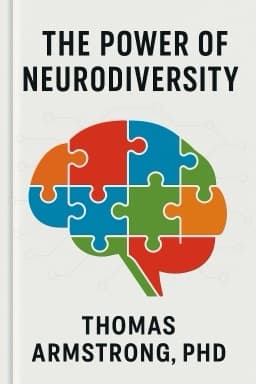
Unlocking the Hidden Superpowers of Neurodiversity: Why ‘Different’ is the New Genius
Discover how embracing neurological differences can revolutionize society, education, and personal growth.

Imagine a world where differences in how our brains function are not seen as flaws or disorders but as unique superpowers waiting to be discovered and celebrated. This is the core message of neurodiversity, a revolutionary concept reshaping how we understand the human mind. Far from being broken, neurodiverse individuals possess extraordinary gifts that can enrich society in countless ways.
At the heart of neurodiversity is the idea that the brain is more like an ecosystem than a machine. Rather than fitting people into narrow categories of 'normal' and 'abnormal,' neurodiversity recognizes a continuum of abilities and traits shared among all of us. Traits such as attention span, sociability, and sensory sensitivity exist on spectrums, meaning everyone exhibits these characteristics in varying degrees. This perspective dissolves the stigma around conditions like ADHD and autism, revealing them as natural variations with distinct strengths.
Take ADHD, for example. Often misunderstood as a deficit, ADHD is actually a developmental delay in brain maturation, particularly in the prefrontal cortex responsible for executive functions. This delay means individuals with ADHD are 'late bloomers' with brains craving stimulation. Their hyperactivity, impulsivity, and novelty-seeking behaviors were evolutionary assets in hunter-gatherer societies. Today, when placed in stimulating, flexible environments, people with ADHD can excel in creativity, problem-solving, and dynamic work roles.
Similarly, autistic individuals often excel as systematizers, thriving in understanding patterns, mechanics, and visual-spatial tasks. Their intense focus and detail orientation have driven human innovation, from the invention of tools to breakthroughs in technology. Sensory sensitivities, often viewed as challenges, are self-regulatory mechanisms that can be accommodated with thoughtful environmental design.
Dyslexia, another form of neurodiversity, involves difficulties with phonological processing but is accompanied by remarkable visual-spatial and creative talents. Many famous thinkers and artists, including Albert Einstein, exhibited dyslexic traits, illustrating that intelligence and creativity are multifaceted and cannot be measured by traditional academic standards alone.
Mood and anxiety disorders, while deeply challenging, can also fuel profound emotional depth and creativity. Historical and contemporary artists and writers have channeled their experiences into works that resonate deeply with humanity. Understanding the biological underpinnings of these conditions, such as nerve-cell atrophy in depression, underscores the importance of compassionate, holistic care.
Even schizophrenia, often feared and misunderstood, reveals a complex relationship between altered perceptions and creativity. Auditory hallucinations occur in a significant portion of the general population, and cultural acceptance dramatically influences outcomes. Supportive communities that embrace neurodiverse experiences foster healing and meaningful expression.
Education plays a pivotal role in nurturing neurodiversity. Inclusive classrooms that employ universal design for learning, assistive technologies, and flexible teaching strategies benefit all students by fostering empathy, collaboration, and diverse talents. Moving beyond segregation to integration creates environments where every learner can thrive.
Looking to the future, neurodiversity advocacy is gaining momentum worldwide, promoting dignity and inclusion. However, ethical challenges like genetic engineering and prenatal screening pose risks to preserving brain diversity. Society must balance technological advances with respect for all forms of human variation.
Embracing neurodiversity means weaving a richer social fabric where every human gift finds a fitting place. It calls on us to celebrate the extraordinary gifts hidden within what was once labeled as disorder and to build a world where all minds are valued and empowered.
By understanding and celebrating neurodiversity, we unlock the potential for innovation, compassion, and a more inclusive future. This journey transforms not only individuals but society as a whole, inviting us to rethink intelligence, ability, and the true meaning of human potential.
Sources: Armstrong’s
Want to explore more insights from this book?
Read the full book summary