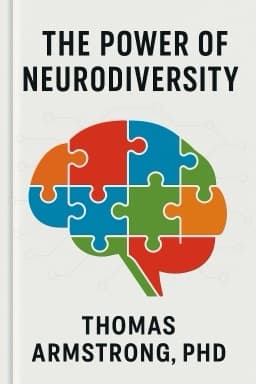
Thomas Armstrong, PhD
A transformative exploration of neurological differences as natural variations with unique strengths, advocating for acceptance, inclusion, and positive niche construction.
The term 'neurodiversity' was first used in print in 1998 by journalist Harvey Blume.
Section 1
8 Sections
Imagine a world where the human brain is not a rigid machine, but a vibrant ecosystem, teeming with life, growth, and complex interactions. This is the foundation of a transformative idea called neurodiversity, which invites us to see neurological differences not as defects or disorders but as natural variations in the rich tapestry of human minds.
In this view, human traits like sociability, attention, and intelligence do not fall neatly into categories of 'normal' or 'disabled' but exist along continuous spectrums. For example, sociability ranges from profound isolation to extreme gregariousness, with countless shades in between.
Consider how cultures have historically defined what is 'normal' or 'abnormal.' In one era, certain behaviors might be revered; in another, stigmatized.
By embracing neurodiversity, we reject the outdated notion of a single 'normal' brain locked away in some vault. Instead, we celebrate the dazzling array of brain types that contribute to the richness of human experience. This mindset opens the door to recognizing strengths hidden within what were once seen as deficits.
As we embark on this journey, keep in mind that understanding brain diversity is just the beginning. The next step is learning how individuals with different brain types thrive when they find environments suited to their unique wiring. This leads us to the fascinating concept of niche construction, where people shape their surroundings to fit their strengths and needs.
Let us now explore how specific neurological differences, such as ADHD, manifest as unique strengths when embraced in the right niches.
What metaphor best describes the brain according to the neurodiversity concept?
15 more quizzes available in app
The brain functions as a complex, evolving ecosystem rather than a mechanical device.
8 more insights available in app
Unlock all 8 sections, 9 insights, full audio, and interactive mind map in the SnapBooks app.
Discover how embracing neurological differences can revolutionize society, education, and personal growth.
Read articleReframing ADHD from a challenge to a unique advantage through science and real-life success stories.
Read article