
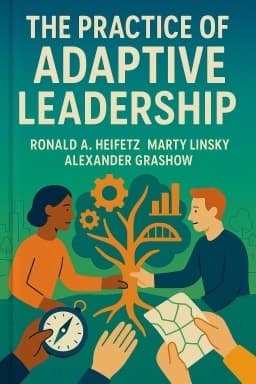
Why Adaptive Leadership Is the Superpower Every Modern Leader Needs
How to Build Resilience and Agility in a Fast-Changing World

Imagine having a superpower that lets you see patterns others miss, mobilize people in times of crisis, and turn setbacks into springboards for growth. That’s what adaptive leadership offers. In today’s volatile, uncertain, complex, and ambiguous (VUCA) world, technical expertise alone isn’t enough. Leaders must become sense-makers, experimenters, and builders of resilience. Adaptive leadership is the framework that turns ordinary managers into extraordinary leaders.
At its core, adaptive leadership is about distinguishing between technical problems—those with known solutions—and adaptive challenges, which require new learning and shifts in values. This distinction is crucial. When COVID-19 hit, for example, some organizations tried to apply old playbooks—tighten budgets, cut staff, wait it out. Adaptive leaders, in contrast, engaged their teams in rapid learning, experimented with new service models, and listened deeply to emerging needs. They built agility not by controlling, but by empowering.
Resilience is another hallmark of adaptive leadership. Rather than fearing conflict or loss, adaptive leaders see them as necessary ingredients for growth. They create 'holding environments'—spaces where people can wrestle with tough issues, voice dissent, and co-create solutions. This is especially vital in sectors like healthcare, where rapid change and high stakes are the norm. A hospital CEO who brings together doctors, nurses, and patients to redesign care pathways is practicing adaptive leadership—mobilizing the system, not just issuing orders.
Agility flows from this mindset. Adaptive leaders treat every intervention as an experiment, learning from failure and iterating quickly. This approach is visible in the best tech startups, where teams pivot based on feedback, not ego. But it’s equally relevant in nonprofits, schools, and government agencies. The secret is humility: adaptive leaders ask, 'What can we learn from this?' rather than, 'Who’s to blame?'
But adaptive leadership isn’t just about systems and strategies—it’s also about the self. Leaders must tend to their own renewal, reflecting on their patterns, triggers, and sources of hope. Burnout is a real risk; thriving requires regular reflection, connection, and celebration of progress. As Heifetz notes, 'The dangers are real, but so are the rewards.'
If you want to build the ultimate leadership superpower, start practicing adaptive leadership. Embrace experimentation, mobilize diverse voices, and never stop learning. The future is uncertain, but with adaptive leadership, you’ll be ready for whatever comes next.
Want to explore more insights from this book?
Read the full book summary