
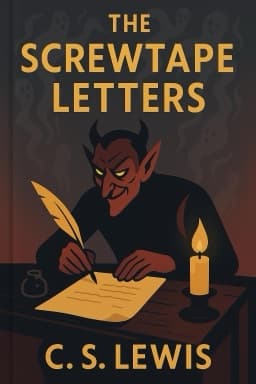
What If Demons Texted? How The Screwtape Letters Predicted Our Digital Distractions
C.S. Lewis’s 1942 masterpiece feels eerily prophetic in the age of smartphones.

If you’ve ever lost an hour to social media and wondered where your day went, you might already be living in the world C.S. Lewis predicted. The Screwtape Letters, originally published in 1942, is a series of fictional letters from a senior demon, Screwtape, to his nephew Wormwood, offering advice on how to best tempt a human 'patient.' The brilliance of Lewis’s satire lies in its subtlety: Screwtape’s best weapon isn’t some grand temptation, but the gentle hum of distraction and routine. In the 21st century, Screwtape would have a field day with our smartphones, streaming platforms, and 24/7 news cycles.
Lewis’s Screwtape is a master of the mundane. He advises Wormwood not to tempt his patient with dramatic evil, but with comfort, busyness, and the endless pursuit of trivia. In one letter, Screwtape boasts that a potential moment of spiritual awakening was averted simply by suggesting the patient go out to lunch. Today, the equivalent might be checking TikTok instead of reflecting on a difficult question, or clicking through emails instead of sitting quietly with our thoughts.
The Screwtape Letters anticipated the erosion of attention as a spiritual crisis. Our devices are designed to keep us scrolling, clicking, and consuming—never quite satisfied, never quite present. Lewis’s insight is that evil is most effective when it keeps us from thinking deeply or loving fully. In today’s language, Screwtape would say: Keep them busy, keep them distracted, keep them isolated in the echo chamber of their own preferences. This is why, for so many, the greatest battle is not against great evil, but against the slow drift into meaninglessness.
Lewis also saw the danger in jargon and fashionable ideas—what we might now call 'virtue signaling' or 'clickbait morality.' Screwtape prefers that his patient repeat slogans and join the latest movements, not because they are right or just, but because they are popular. The result? Shallow convictions and a reluctance to examine one’s own life. In our world, this might look like reposting a hashtag without ever having a real conversation about the issue.
The message of The Screwtape Letters is not despair, but hope. Lewis believed that recognizing these subtle temptations is the first step to reclaiming our lives. By turning off our devices, seeking silence, and practicing intentional presence, we can resist the slow drift and rediscover the meaning that distraction tries to steal. The devil, it turns out, is not just in the details—but in the notifications, too.
References: SparkNotes on Themes 2 , Blinkist Key Ideas 4 , A Pilgrim in Narnia 1
Want to explore more insights from this book?
Read the full book summary