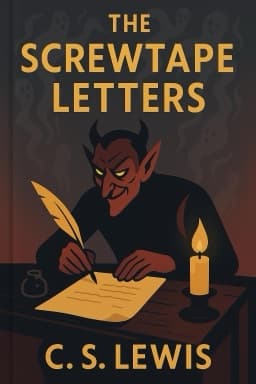
C. S. Lewis
A satirical, insightful exploration of temptation and spiritual warfare through the letters of a senior demon to his apprentice.
C. S. Lewis wrote The Screwtape Letters during World War II, inspired by the anxieties and spiritual challenges of the era.
Section 1
8 Sections
Let us begin our journey into the shadowy corridors of the mind, where the greatest battles are waged not with swords or shouts, but with the gentle hush of the everyday. Imagine, for a moment, a soul sitting quietly at a desk, surrounded by the comforting clutter of daily life—a ringing phone, a stack of bills, a half-read newspaper, and the soft glow of a computer screen.
We are told that the greatest victories of darkness are not won by horror or violence, but by the simple act of keeping our minds busy—too busy to reflect, too occupied to wonder. In one striking example, a man poised on the edge of a life-changing realization is effortlessly steered away by the thought of a midday meal. The lesson is clear:
Language, too, becomes a tool of confusion. Instead of encouraging people to reason, to question, or to seek truth, the story’s tempters use jargon—words that sound important but mean little. Academic phrases, fashionable slogans, and empty catchphrases fill the air, crowding out genuine thought. It is not reason that keeps us from the truth, but the endless parade of words that never lead us anywhere.
As you listen, let these insights settle. Consider how your own daily routines and the language that surrounds you might be shaping your journey in ways you have barely noticed. The story invites us to pause, to take a breath, and to look beneath the surface of our lives. For it is only by recognizing the power of the mundane that we can begin to reclaim our attention and our purpose.
And so, with a gentle nudge, we move from the world of distraction to the realm of habits—the silent architects of our character, waiting in the next section to reveal their quiet influence...
What is the greatest tool for distraction according to the story?
15 more quizzes available in app
Subtle distractions are more effective than overt temptations.
7 more insights available in app
Unlock all 8 sections, 8 insights, full audio, and interactive mind map in the SnapBooks app.
C.S. Lewis’s 1942 masterpiece feels eerily prophetic in the age of smartphones.
Read articleWhy the biggest dangers to your soul are the smallest choices you make every day.
Read article