
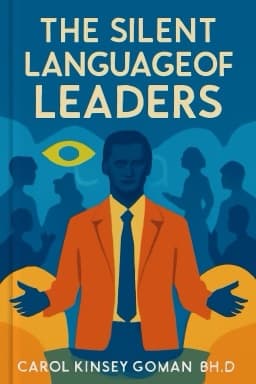
Unlocking Leadership Power: How Your Body Language Speaks Louder Than Words
Discover the hidden signals that shape your leadership impact and how mastering them can transform your influence.

Leadership is often defined by what we say, but the truth is that our body speaks volumes before a single word leaves our lips.
Imagine walking into a room where your every move is subtly interpreted by your audience's emotional brain, the limbic system, which reacts faster to body language than to spoken words. This rapid processing means that your nonverbal signals can either open doors or close them before you even begin to speak.
For leaders, this understanding is transformational. The concept of 'personal curb appeal' likens leadership presence to the emotional impression a house’s exterior makes on a passerby. Warmth, conveyed through open postures and genuine smiles, invites trust, while authority, demonstrated by confident stances and controlled gestures, commands respect.
Negotiations offer a vivid example of body language’s power. In just thirty minutes, negotiators exchange over eight hundred nonverbal signals, including feet movements that often reveal hidden emotions like anxiety or disengagement. Mastering the art of reading these signals—and projecting confidence through firm handshakes, mirroring, and open palms—can tip the scales in your favor.
Leading change requires even more nuanced use of body language. The amygdala triggers fear responses to change, visible in defensive postures or avoidance. Successful leaders project calm confidence and validate emotions nonverbally, using empathetic gestures to build trust and inspire commitment.
Collaboration thrives on inclusion, which is communicated silently through eye contact, smiles, nods, and open postures. Neuroscience tells us that social exclusion activates the same brain regions as physical pain, underscoring the importance of fostering emotional safety through nonverbal cues.
The dynamics of leadership communication also vary by gender and culture. Men and women tend to use different nonverbal styles, with men often showing dominance and women affiliative signals. Cross-cultural teams demand sensitivity to proxemics, gestures, and rituals like business card exchanges, where missteps can cost trust.
In our digital age, technology reshapes how body language is perceived. Virtual meetings magnify facial expressions and upper body gestures, requiring leaders to adapt their presence for the camera. Younger generations favor visual and authentic communication, making emotional intelligence and technological savvy key to future leadership success.
Ultimately, leadership mastery is about aligning your silent language with your spoken words, cultivating self-awareness, and adapting to context. When words fail, your body speaks—make sure it tells a story of warmth, authority, and genuine connection.
This comprehensive understanding of leadership body language empowers you to influence, inspire, and innovate with authenticity and impact.
Want to explore more insights from this book?
Read the full book summary