
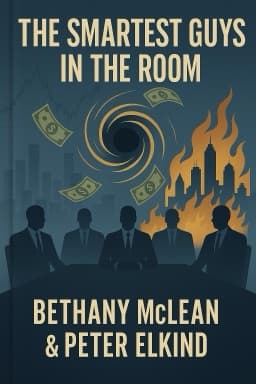
Financial Alchemy: How Enron’s Innovations Fooled Wall Street—and Themselves
The Dazzling Tricks and Hidden Risks Behind Enron’s Financial Engineering

The Dazzling Tricks and Hidden Risks Behind Enron’s Financial Engineering
Enron’s reputation as a financial innovator was built on its ability to turn the mundane business of energy delivery into a high-stakes game of financial engineering. The company’s Gas Bank model allowed it to act as a middleman, trading energy contracts like stocks and bonds. This innovation created new markets and generated enormous profits—at least on paper.
But behind the scenes, Enron’s financial statements became a labyrinth of complexity. The use of mark-to-market accounting meant that the company could record the full value of long-term deals as immediate profit, regardless of whether the cash would ever materialize. This created a steady stream of apparent earnings, boosting the stock price and making Enron a Wall Street favorite.
As Enron expanded into new markets—electricity, broadband, even weather derivatives—the risks multiplied. Off-balance-sheet entities, managed by insiders, were used to hide debt and inflate profits. Major banks and auditors, enticed by lucrative fees, helped design these structures and signed off on the numbers, even as doubts grew behind closed doors.
The result was a financial house of cards. Investors, analysts, and even many employees struggled to understand the true state of the company. The complexity was not accidental—it was a deliberate strategy to keep questions at bay and maintain the illusion of perpetual growth.
Enron’s story is a stark reminder that financial innovation, while powerful, can also be dangerous when it outpaces understanding. For investors and regulators, the lesson is clear: demand transparency, question the numbers, and never assume that complexity equals value. For business leaders, Enron’s fate is a warning to ensure that innovation is grounded in reality, not just in clever accounting.
Want to explore more insights from this book?
Read the full book summary