
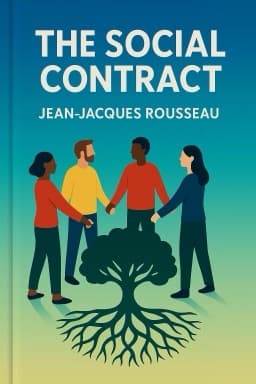
From Chains to Community: How Rousseau’s Social Contract Inspires Modern Movements
How Grassroots Movements Channel Rousseau’s Revolutionary Ideas

How Grassroots Movements Channel Rousseau’s Revolutionary Ideas
Every time a group of strangers gathers to demand justice, every time a community organizes for clean water or fair wages, Rousseau’s spirit is present. His 'Social Contract' taught that freedom is not a solitary affair, but a shared project. By forging a collective will, ordinary people can break the chains of injustice and build new forms of community.
Consider the civil rights movement, where millions risked safety for the promise of equality. Or the environmental activists who link arms to protect forests and rivers. These are not isolated acts—they are the living proof of Rousseau’s claim that 'each of us puts his person and all his power in common.'
Rousseau’s ideas show up in the way activists build consensus, draft charters, and hold leaders accountable. The social contract is not a relic; it’s a living, breathing force that moves people to action. When laws fail, when institutions falter, it is the power of the general will that creates change.
Modern technology has only amplified these possibilities. Online petitions, crowdfunding, and viral campaigns are new forms of the social contract, enabling people to unite across borders and backgrounds. Yet the core lesson remains: real freedom is found in solidarity, not isolation. By coming together, we create the world we wish to see. 3 4
Want to explore more insights from this book?
Read the full book summary