
Why Most Meetings Suck—and What Science Says to Fix Them Fast
Unmasking the Hidden Costs and Surprising Solutions for Modern Meetings

Unmasking the Hidden Costs and Surprising Solutions for Modern Meetings
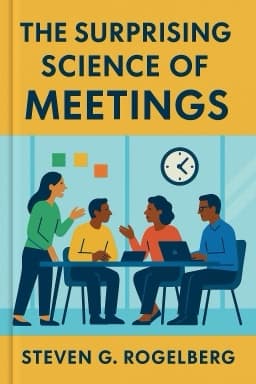
Meetings: the word alone can trigger groans in offices around the world. But why do so many of us dread them? According to Steven G. Rogelberg’s groundbreaking book, The Surprising Science of Meetings, it’s not meetings themselves that are the problem—it’s how we run them. The average professional attends dozens of meetings each week, and collectively, US businesses lose an estimated $1.4 trillion every year to unproductive meetings. That’s not just time wasted; it’s creativity stifled and morale drained.
Rogelberg’s research reveals that the problem goes far beyond the conference room. Bad meetings cause what he calls 'meeting recovery syndrome,' where attendees need time to recover from frustration and disengagement, impacting their work and the mood of those around them. The indirect costs—lost opportunities for deep work, innovation, and even rest—are immense. But the answer isn’t to abolish meetings. In fact, organizations that try to drastically cut meetings often end up with communication breakdowns, isolation, and poor alignment. Meetings are essential for teamwork, inclusion, and leadership—when done right.
So, how do we fix them? The science points to several practical solutions. First, challenge the default: don’t automatically schedule hour-long meetings. Parkinson’s Law tells us that work expands to fill the time available, so try 48-minute or even 25-minute sessions. Odd-length meetings create urgency and focus, freeing up transition time and reducing lateness. Next, design intentional agendas. A good agenda isn’t just a checklist; it’s a map for the meeting, with key topics prioritized and ownership assigned. Research shows that when each agenda item has a Directly Responsible Individual (DRI), accountability and follow-through improve dramatically.
But perhaps most important is breaking routine. Routine is the enemy of engagement. Try standing meetings—they’re 34% shorter on average—or start with a quick energizer, like music or snacks. Change the location, rearrange the seating, or introduce symbolic objects (like an empty chair for the customer) to spark creativity. And don’t forget inclusion. Meetings are the primary way employees find their voice. Use brainwriting—silent, written idea generation—to ensure everyone, especially introverts, can contribute. In remote and hybrid settings, leverage digital tools for anonymous input and rotate facilitators to keep things fresh.
Ultimately, the best meetings are those where everyone feels heard, valued, and energized. Leaders must be willing to look in the mirror, seek feedback, and experiment with new formats. The science is clear: small changes can lead to big results. So next time you’re tempted to complain about another meeting, remember—you have the power to make it better.
Sources: Steven G. Rogelberg, The Surprising Science of Meetings; bregmanpartners.com; graduate.asu.edu
Want to explore more insights from this book?
Read the full book summary