
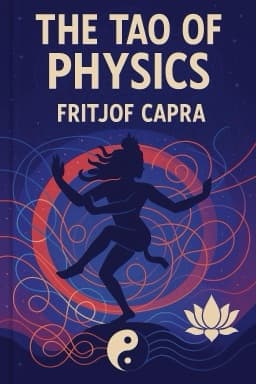
Beyond Science and Religion: The Quantum Mysticism Revolution You Didn’t Know You Needed
Why the latest physics discoveries are shaking up not just science but also spirituality—and what that means for your understanding of reality.

For centuries, science and spirituality were often seen as opposing forces—one grounded in empirical facts and rationality, the other in faith and mystery. However, the advent of quantum physics has begun to blur these boundaries, revealing a universe far stranger and more interconnected than classical science ever imagined.
This paradox is not just a scientific curiosity but a profound challenge to our ways of thinking. Zen Buddhism’s use of koans—paradoxical riddles designed to break the mind free from habitual patterns—mirrors this quantum strangeness. The famous koan, 'What is the sound of one hand clapping?' forces the mind beyond logic into direct insight. Similarly, Taoism’s principle of wu-wei encourages effortless action in harmony with the Tao, reflecting the natural flow and uncertainty found in quantum processes.
These ancient traditions and modern physics converge on the idea that reality cannot be fully captured by words or concepts. The observer effect in quantum mechanics, where the act of measurement influences the observed phenomenon, parallels the mystical understanding that the self and the world are inseparable.
Embracing this quantum mysticism revolution means recognizing the limits of intellectual knowledge and opening to direct experience and intuition. It encourages humility, curiosity, and a willingness to dwell in mystery. Moreover, it raises important ethical considerations: the power of scientific knowledge must be guided by wisdom and compassion to avoid destructive outcomes.
As you reflect on these ideas, consider how they might transform your perspective on science, spirituality, and the nature of reality itself.
Want to explore more insights from this book?
Read the full book summary