
Inside Kafka’s Courtroom: The Surreal Characters and Symbolism of The Trial
Meet the unforgettable figures of Kafka’s The Trial and discover the rich symbolism that breathes life into this existential masterpiece.

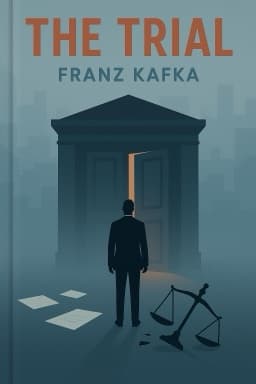
Franz Kafka’s The Trial is more than a story of legal persecution; it is a vivid tapestry woven from surreal characters and potent symbolism that illuminate the human struggle against alienation and arbitrary power. At its center stands Josef K., a man caught in an unfathomable legal system, whose journey reveals the fragility of identity and the elusiveness of justice.
The court usher, a man burdened by frustration and dreams of violence, represents the human cost of bureaucracy. His antagonism towards a young student with a reddish beard highlights tensions within the court’s hierarchy. The student himself, ambiguous and powerful, symbolizes the opaque nature of authority.
The lawyer Huld embodies the ambivalence of legal defense — caught between duty and complicity, his evasive tactics reflect the futility of seeking justice within a corrupt system. The merchant Block’s drawn-out ordeal exemplifies the trial’s capacity to consume and exhaust, while the painter Titorelli offers insight into the trial’s possible outcomes, distinguishing between actual and apparent acquittal and the strategic use of delay.
The priest’s role introduces a spiritual dimension, reminding us that the trial is not merely a legal process but an existential reckoning. The cathedral setting, with its solemn architecture and religious symbols, elevates the narrative to questions of morality and ultimate judgment.
The settings themselves — cramped attic offices, crowded courtrooms, and the bleak quarry of the final scene — serve as powerful symbols. They reflect the marginalization, decay, and harsh realities of Josef K.’s world. The theatricality of the courtroom proceedings, with manipulated audiences and staged performances, underscores the novel’s exploration of life as a performance under oppressive systems.
Through these characters and symbols, Kafka crafts a profound meditation on guilt, identity, and the human condition. The novel invites readers to confront the absurdity of existence and the complexity of justice in a world where meaning is often elusive.
Understanding these elements deepens our appreciation of Kafka’s masterpiece and its lasting impact on literature and thought.
Want to explore more insights from this book?
Read the full book summary