
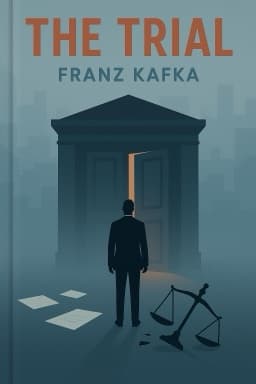
Why Kafka’s The Trial Still Haunts Us: The Nightmare of Bureaucracy Unveiled
Dive into the surreal world of Kafka’s The Trial and discover why its chilling depiction of bureaucracy and alienation remains eerily relevant today.

Few novels capture the oppressive weight of bureaucracy and the existential anxiety of modern life quite like Franz Kafka’s The Trial. The story of Josef K., a man arrested and prosecuted by a faceless, incomprehensible legal system without ever being told the charges against him, is a chilling allegory for the alienation and helplessness many feel today.
The novel opens with an arrest that is both sudden and unexplained, thrusting Josef K. into a surreal nightmare. This moment introduces the central theme of arbitrary authority — a system that operates without transparency or accountability. The guards who arrest K. act as agents of a mysterious power, indifferent to justice or reason. This disorienting experience reflects Kafka’s critique of bureaucratic systems that prioritize procedure over humanity, often leaving individuals lost and vulnerable.
Throughout the novel, the courtroom and its proceedings become a theater of the absurd. The initial inquiry is less a fair trial and more a farcical performance, where the audience is divided, reactions are manipulated, and justice is elusive. Josef K.’s attempts to understand and navigate this labyrinthine system only deepen his alienation. The court’s offices, tucked away in cramped attic spaces, reveal a shadowy bureaucracy staffed by flawed, frustrated individuals — from the resentful court usher to the enigmatic student — each embodying facets of institutional dysfunction.
The characters Josef K. encounters — the ambivalent lawyer, the weary merchant, the insightful painter, and the spiritual priest — each offer perspectives on guilt, law, and morality. Their voices reflect the complexity and ambiguity of justice in Kafka’s world, where legal terminology like 'actual acquittal' and 'protraction' reveal strategic delays and the manipulation of outcomes. The priest’s counsel introduces a spiritual dimension, suggesting that the trial transcends earthly law and touches on existential judgment.
The novel’s climax, set in a bleak quarry, is a haunting tableau where the theatrical farce meets tragic inevitability. Josef K.’s execution is staged like a play, with supporting actors and symbolic objects underscoring the futility of resistance and the crushing power of the system. This final scene crystallizes the novel’s meditation on guilt, sacrifice, and the inscrutable forces that govern human fate.
Kafka’s legacy endures not only because of the novel’s literary brilliance but also because of its profound philosophical insights. The term 'Kafkaesque' has entered common language, describing surreal, illogical, and oppressive situations that echo Josef K.’s ordeal. The preservation and publication of Kafka’s manuscripts, despite his wishes for destruction, have ensured that his vision continues to challenge and inspire readers worldwide.
In an age where bureaucracy and institutional power remain pervasive, The Trial offers a mirror reflecting the anxieties of modern existence. It invites us to question authority, recognize the fragility of justice, and hold onto our humanity amid confusion and control. Through its haunting narrative and unforgettable characters, Kafka’s masterpiece remains a vital exploration of the human spirit’s resilience in the face of overwhelming odds.
Whether you are new to Kafka or revisiting this classic, understanding the layers of meaning in The Trial enriches your appreciation of literature and life itself.
Want to explore more insights from this book?
Read the full book summary