
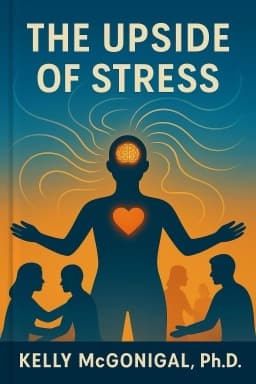
Why Stress Might Be Your Secret Superpower: The Surprising Science Behind a Positive Mindset
Discover how rethinking stress can transform your health, happiness, and success.

Stress has long been cast as the enemy of health and happiness, a relentless force that wears us down and leads to burnout, illness, and despair. But emerging science offers a refreshing reversal:
Imagine two people experiencing the same stressful event. One believes stress will harm their health, while the other sees it as a normal, even helpful, part of life. Over time, the first person faces a significantly higher risk of premature death, while the second often thrives despite the pressure. This is not just correlation—it’s a causal effect of mindset on biology and outcomes.
How does this happen? Research shows that stress triggers a complex biological response involving hormones like cortisol, adrenaline, DHEA, and oxytocin. The classic fight-or-flight model explains how stress prepares us to escape danger, but it’s only part of the story. There’s also the challenge response, which energizes focus and confidence, and the tend-and-befriend response, which fosters social bonding and caregiving through oxytocin release.
These diverse responses reveal that stress is a multifaceted tool designed by evolution not just to protect us but to help us engage, connect, and grow.
Moreover, stress often accompanies the most meaningful parts of life—parenting, caregiving, pursuing goals, and facing health challenges. The paradox is that a meaningful life is typically a stressful one, but that stress signals engagement and purpose rather than distress.
One of the most effective ways to transform stress is through values reflection. Writing about what matters most helps reframe daily hassles as meaningful expressions of commitment and love. For example, a busy parent might see the chaos of mornings not as a burden but as an opportunity to nurture their child.
Brief mindset interventions—simple exercises that shift beliefs about stress and belonging—have been shown to improve academic performance, reduce depression, and increase resilience for years after just a single session. These changes ripple outward, enhancing social connections and emotional strength.
Another powerful technique is reappraising anxiety as excitement. By consciously labeling nervous energy as excitement, people improve their focus and performance, turning fear into fuel. This approach also helps prevent burnout by sustaining motivation and reducing emotional exhaustion.
Social connection is another cornerstone of stress resilience. The hormone oxytocin released during stress encourages us to seek support and care for others, activating reward centers in the brain and building strong community ties that buffer against stress’s harmful effects.
Finally, adversity itself can be a catalyst for profound personal growth. Post-traumatic growth shows how people can find new meaning, strength, and purpose after hardship. Actively seeking benefits in challenges supports recovery and enriches life.
In sum, stress is neither your enemy nor your friend—it is a powerful force that, when understood and embraced with the right mindset, can propel you toward a fuller, richer, and more resilient life.
Embrace stress as your secret superpower, and watch how your health, happiness, and success flourish.
Want to explore more insights from this book?
Read the full book summary