
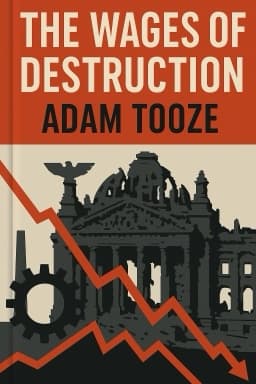
Inside the Nazi War Economy: How Forced Labor and Genocide Fueled Hitler’s Military Machine
The Dark Economic Engines Behind the Holocaust and the Nazi War Effort

The Dark Economic Engines Behind the Holocaust and the Nazi War Effort
The Holocaust is often viewed through the lens of ideology and human tragedy, but its economic dimensions are equally crucial to understanding the Nazi regime’s operations. Far from being a purely ideological campaign, genocide was deeply intertwined with economic exploitation. The systematic confiscation of Jewish property and the forced labor extracted from concentration camp prisoners were fundamental to sustaining the Nazi war economy.
Major industrial firms like IG Farben built chemical plants near Auschwitz, employing camp prisoners under brutal conditions to produce vital war materials. This collaboration blurred the lines between industry and extermination, making the Holocaust an integral component of economic production rather than an isolated atrocity.
The Nazi leadership rationalized genocide not only on racial grounds but also as a means to secure resources, labor, and living space through the depopulation of Eastern Europe. Forced laborers from occupied territories and camps became essential to compensating for labor shortages, despite the horrific human cost and inefficiencies caused by such exploitation.
This dark economy of racial war exemplifies how ideological fanaticism and material interests can become grotesquely intertwined. The economic exploitation embedded in genocide challenges us to confront the full scope of Nazi crimes and the complicity of industrial actors in sustaining such brutality.
By understanding these economic underpinnings, we gain critical insights into how total war economies function and the devastating consequences of combining ideology with ruthless economic imperatives.
References: 2 , 3 , 4
Want to explore more insights from this book?
Read the full book summary