
The Dark Side of Wellness: Why Chasing Perfection is Making Us Miserable
How the pursuit of health and happiness has become a moral trap that controls our lives.

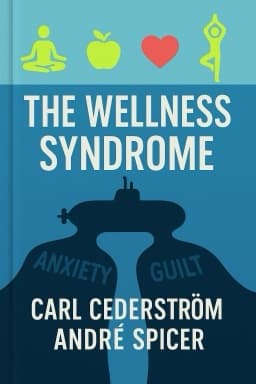
In a world saturated with health advice, mindfulness apps, and fitness challenges, the promise of wellness has never been louder or more insistent. Yet beneath this glossy surface lies a paradox: the more we chase wellness, the more we feel trapped by its demands. This is the essence of what Carl Cederström and André Spicer call the 'Wellness Syndrome' — a cultural condition where wellness is no longer a personal choice but a moral obligation that governs our behavior, emotions, and social relations.
The wellness movement, initially a call for healthier living, has morphed into a pervasive ideology that stigmatizes those who fail to conform. Universities require students to sign wellness contracts, workplaces impose fitness regimes, and governments measure citizens’ happiness as a policy metric.
Consider the corporate world, where wellness programs cost billions annually. Employees are encouraged — or pressured — to exercise during breaks, monitor their diets, and participate in mindfulness sessions. While these initiatives promise holistic benefits, they also extend managerial control into personal lives, making workers responsible for their productivity through their physical and mental health.
Diet culture is another front where wellness ideology exerts power. Dieting is framed as a moral project, enforcing self-surveillance and public confession. Yet paradoxically, many dieters experience increased guilt and failure, caught in cycles that reinforce rather than relieve distress.
Moreover, wellness ideology fuels class-based disgust and exclusion. Media portrayals of the 'undeserving' poor or 'lazy' working class link morality with body aesthetics and lifestyle choices, obscuring structural inequalities. Disgust operates as a visceral moral judgment that precedes rational debate, making social exclusion feel natural and justified.
Happiness itself has become a moral duty. Positive psychology and government policies promote happiness as a goal, but the pressure to be happy creates guilt and anxiety when feelings fall short. The 'superego injunction to enjoy' demands constant emotional regulation, often deepening distress.
Neoliberalism frames life as a project of endless self-optimization amid precarious employment and uncertainty. Wearable devices, self-tracking apps, and gamification techniques extend surveillance into every corner of life, blurring boundaries between work and wellness.
Yet, resistance emerges in the form of illness as a reprieve, fat acceptance movements, and radical rejections of health norms. These challenge the wellness command and reveal its limits.
Ultimately, true joy transcends the controlled pleasures of wellness. It thrives in unpredictability, spontaneity, and connection — elements often excluded by the wellness regime.
Living authentically beyond the wellness syndrome means embracing imperfection, vulnerability, and collective care. It requires political engagement to address systemic inequalities rather than reducing wellbeing to individual responsibility.
This exploration invites readers to rethink wellness not as a pursuit of perfection but as a complex social phenomenon with profound implications for how we live, work, and relate to each other.
For a comprehensive understanding, explore the detailed insights from the original work and related analyses across diverse sources. 1 2 3 4
Want to explore more insights from this book?
Read the full book summary