
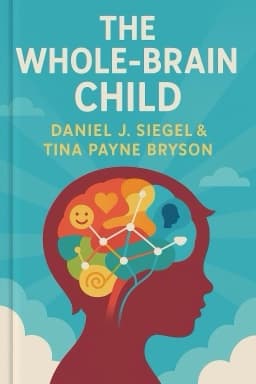
How Understanding Your Child’s Brain Can Make Parenting Less Stressful (and More Fun!)
Science-Backed Parenting Hacks for Calmer Days and Happier Kids

Science-Backed Parenting Hacks for Calmer Days and Happier Kids
Imagine a world where every tantrum, every meltdown, and every argument is not a failure, but a chance to help your child’s brain grow stronger. That’s the world 'The Whole-Brain Child' invites us into. As parents, we often feel overwhelmed by the daily chaos, but neuroscience shows that these very moments are the building blocks of resilience, empathy, and self-control.
The book reveals that the brain is divided into 'upstairs' and 'downstairs' regions. The downstairs brain handles emotions and survival instincts, while the upstairs brain is responsible for logic, planning, and empathy. Young children spend a lot of time 'downstairs,' which is why logic doesn’t work during a meltdown. Instead of trying to reason, the best response is to connect—offer a hug, name the feeling, or just sit quietly together. Once calm returns, you can guide your child back to problem-solving.
Practical strategies abound: let your child make small choices (red socks or blue?), encourage them to move when overwhelmed (a quick run or a silly dance), and use storytelling to help them process tough experiences. These simple actions actually rewire the brain for better self-regulation and emotional intelligence.
But what about when you lose it? The book reassures us: every parent gets angry sometimes. The secret is repair. Apologizing to your child models vulnerability, responsibility, and the power of mending relationships. This is more valuable than pretending to be perfect.
By focusing on connection, movement, and repair, you can make parenting less stressful—and a lot more fun.
So next time chaos erupts, remember: you’re not just surviving, you’re helping your child’s brain grow. And you’re growing, too. That’s a win for everyone.
Want to explore more insights from this book?
Read the full book summary