
Taboo, Law, and Power: Who Gets to Choose Which Plants Are Drugs?
The Strange and Political History of How We Decide What’s Legal, Sacred, or Forbidden

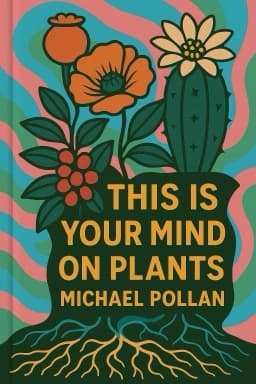
Why is a cup of coffee a symbol of productivity, while a poppy plant is a symbol of crime? The answer, as Michael Pollan shows in 'This Is Your Mind on Plants,' lies not in chemistry but in culture, politics, and power.
Drug laws have always reflected more than just health concerns—they are tools of social control. Opium bans in the United States targeted Chinese immigrants; cannabis laws were used to police Mexican and Black communities. Meanwhile, caffeine—once banned in Mecca and London—became the drink of choice for the Enlightenment and beyond.
Pollan’s stories highlight the arbitrary nature of these boundaries. The same substance can be legal, sacred, or forbidden, depending on who uses it and why. Peyote is protected for Indigenous ceremonies but criminalized for others. Pharmaceutical opioids are legal, while garden poppies are not.
These shifting sands reveal a deeper truth: our taboos and laws tell us not just about drugs, but about ourselves—our fears, our prejudices, and our hopes. As attitudes change and new research emerges, many societies are rethinking their approach to plant drugs, moving toward harm reduction, decriminalization, and respect for tradition.
The future of plant drugs will be shaped by our willingness to question old stories and write new ones—ones that balance safety, freedom, and the wisdom of both science and tradition.
References: Michael Pollan’s 'This Is Your Mind on Plants', Michael Pollan’s Official Book Page
4
Want to explore more insights from this book?
Read the full book summary