
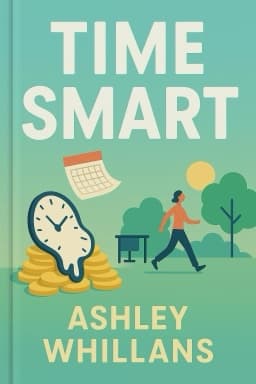
Why You’re Always Busy: The Secret Epidemic of Time Poverty (And How to Escape)
Discover the hidden forces making us feel time-starved, and the first steps to reclaiming your hours.

Have you ever wondered why, even with all our modern conveniences, you still feel like there’s never enough time? You’re not alone. In her groundbreaking book 'Time Smart,' Harvard professor Ashley Whillans reveals a hidden epidemic sweeping the globe: time poverty. Unlike financial poverty, time poverty isn’t about how much you earn or own—it’s about the persistent feeling of having too much to do and not enough time to do it. This feeling is so widespread that, in surveys, up to 80% of adults in developed countries say they always feel rushed. But here’s the paradox: data shows that we actually have more leisure time than our grandparents did. So why are we so frazzled?
Part of the answer lies in our culture. Busyness has become a badge of honor, a status symbol that signals importance and productivity. We boast about packed calendars and late nights, equating exhaustion with success. Technology, too, plays a double-edged role. While it promises efficiency, it also brings a relentless stream of notifications, emails, and distractions. Our leisure hours are shredded into 'time confetti,' making it nearly impossible to truly relax or recharge.
This constant rush isn’t just an inconvenience—it’s a serious problem. Time poverty is linked to higher stress, worse health, and even reduced happiness. In fact, researchers estimate that the health and productivity costs of time stress run into the hundreds of billions of dollars each year. But there’s hope. Whillans argues that the first step to escaping time poverty is to recognize its causes and challenge the cultural myths that keep us trapped. By understanding that time is our most valuable resource—far more precious than money—we can start to make choices that prioritize our well-being over endless productivity.
In the pages ahead, you’ll discover the most common time traps, the science behind our sense of busyness, and practical strategies to reclaim your hours. But first, reflect on your own life: when was the last time you truly felt at ease with your schedule? What would it mean to live time-affluent, not just time-rich? The answers may surprise you—and they’re closer than you think.
Want to explore more insights from this book?
Read the full book summary