
Why Your Relationship Struggles Are Not Your Fault — And How ‘Us’ Can Save Them
Break free from blame and discover the trauma-informed path to relational healing.

It’s easy to feel like relationship problems are personal failures. You might think, 'If only I were less sensitive,' or 'If only my partner would change.' But what if the struggles you face are rooted in deeper, unconscious survival mechanisms shaped by trauma?
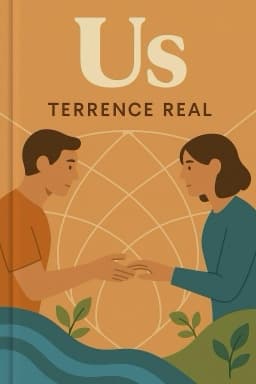
Terrence Real’s book ‘Us’ offers a compassionate and science-backed framework that shifts the narrative from blame to understanding. At the heart of this framework is the concept of the Adaptive Child — an internal part formed in response to early relational wounds. This part often drives reactive behaviors like anger, withdrawal, and control, which can sabotage intimacy.
Understanding that these behaviors are survival strategies rather than moral failings is liberating. It invites couples to approach each other with empathy rather than judgment, recognizing that beneath the surface reactions lies a wounded child seeking safety.
Neurologically, our brains are wired for connection. Social Baseline Theory shows that trusted relationships help conserve brain energy by sharing emotional regulation. When trauma disrupts this connection, the brain perceives threat, triggering fight, flight, or freeze responses.
Cultural myths of rugged and Romantic individualism further complicate this picture by promoting ideals that can isolate us from the very connections we need. Rugged individualism prizes self-sufficiency, often discouraging vulnerability, while Romantic individualism emphasizes unique self-expression, sometimes at the expense of relational harmony.
Real shows that healing requires minute-to-minute relational mindfulness — a practice of noticing impulses before reacting, choosing connection over conflict. This ongoing work builds trust, allowing the Wise Adult part of ourselves to soothe the Adaptive Child and foster healthy, loving relationships.
By reframing relationship struggles as trauma responses and cultural influences rather than personal failings, ‘Us’ offers hope and practical tools for change. It reminds us that love is possible when we choose connection, courage, and compassion every day.
Want to explore more insights from this book?
Read the full book summary