
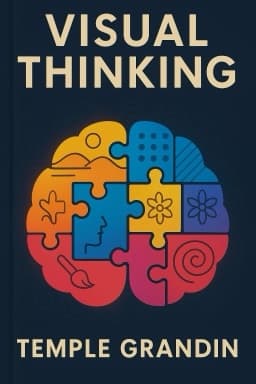
The Secret Weapon in Disaster Prevention: Why Visual Thinkers Matter
How visual thinking skills can avert catastrophes and why diverse cognitive teams save lives.

When disaster strikes, the aftermath is often traced back to overlooked details and unseen risks. Visual thinkers possess a unique ability to perceive these subtleties—whether it’s a shadow on a nuclear plant’s backup generator or the spatial relationship of sensors in an aircraft cockpit. Their mental models allow them to simulate and visualize how complex systems behave under stress, making them invaluable to safety and engineering teams.
Take the Fukushima nuclear disaster, where a combination of design flaws and ignored warning signs led to catastrophic failure. Visual thinkers could have identified vulnerabilities in the plant’s layout and emergency systems, potentially averting the crisis. Similarly, the Boeing 737 MAX crashes involved critical design oversights that might have been caught by teams incorporating visual cognition.
Engineering and safety are not just about calculations and protocols; they require a deep intuitive understanding of how machines and environments interact. Visual thinkers excel at this, complementing verbal and abstract thinkers who might focus more on data and procedures.
Studies show that cognitively diverse teams outperform homogenous ones in problem-solving and innovation. Including visual thinkers in design and safety teams creates a robust defense against errors and oversights. It fosters an environment where multiple perspectives challenge assumptions and uncover hidden risks.
Recognizing and integrating visual thinking into disaster prevention strategies is not just beneficial—it is essential. As technology grows more complex, the need for varied cognitive approaches increases. Embracing neurodiversity in engineering can save lives, protect infrastructure, and build a safer future.
Sources: Temple Grandin’s 'Visual Thinking', Deloitte Insights on neurodiversity and innovation, Rethink Care on workforce inclusion 1 3 2
Want to explore more insights from this book?
Read the full book summary