
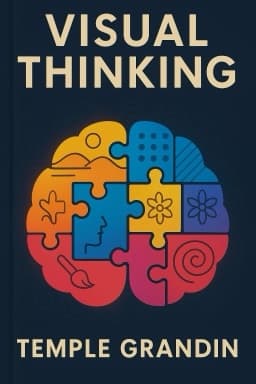
Unlocking Genius: How Visual Thinking is Changing Education and Innovation Forever
Discover the transformative power of visual thinking and why our education system must evolve to nurture every kind of mind.

In a world dominated by words and numbers, a silent revolution is underway—one that celebrates the power of images, patterns, and hands-on learning. Temple Grandin’s seminal work on visual thinking shines a bright light on a group of thinkers who see the world not through language, but through vivid mental pictures. These visual thinkers, who include many with autism, possess unique cognitive gifts that have driven some of humanity’s greatest innovations. Yet, paradoxically, our education systems often overlook or even screen out these talents.
Visual thinking is not simply about having good eyesight; it is a mode of cognition where the brain processes information through detailed images or abstract spatial patterns. Object visualizers conjure photorealistic images and excel at mechanical and artistic tasks, while spatial visualizers manipulate abstract patterns and excel in math and science. Recognizing these differences is key to tailoring education and work environments that foster diverse talents.
Unfortunately, the decline of hands-on classes like woodworking, welding, and home economics since the 1990s has disproportionately hurt visual thinkers. These classes were vital for engaging students who learn best by doing and seeing. Coupled with the abstract barriers posed by algebra and standardized testing, many visual thinkers are left behind, leading to a shortage of skilled tradespeople and a loss of innovation potential in critical industries.
This gap has real-world consequences. Modern manufacturing plants increasingly rely on imported machinery, reflecting a domestic skills shortage. Meanwhile, countries like Switzerland demonstrate the power of apprenticeship programs that blend work and education, maintaining low youth unemployment and cultivating skilled workers. These models offer a hopeful blueprint for revitalizing education and workforce development.
Moreover, cognitive diversity—bringing together visual, verbal, and spatial thinkers—fuels innovation. Teams composed of diverse minds solve problems more creatively and effectively than homogenous groups. Historical partnerships between inventors, engineers, artists, and scientists illustrate how complementary thinking styles lead to breakthroughs.
Neurodiversity, including autism, contributes to this richness. Many on the spectrum possess extraordinary pattern recognition and visual thinking abilities that drive invention and creativity. Contrary to stereotypes, creative geniuses often thrive amidst what appears to be mental or physical disorganization—a messy desk may hide a brilliant mind at work.
Visual thinking also plays a critical role in safety and disaster prevention. From nuclear power plants to airplane design, the presence of visual thinkers on teams can identify risks and design flaws that others may miss, preventing catastrophes and saving lives.
Reimagining education to embrace all minds—through flexible pacing, hands-on learning, vocational skills, and support for neurodiverse learners—is essential to unlocking human potential. Early childhood education benefits from recognizing that children think visually before mastering language, and acceleration helps gifted learners thrive.
Looking forward, a society that values every cognitive style will be more innovative, resilient, and compassionate. Recognizing the hidden visual thinkers among us and nurturing their talents is not just an educational imperative but a societal one.
By embracing the full spectrum of human cognition, we can unlock genius, drive progress, and build a future where every mind matters.
Sources: Temple Grandin’s 'Visual Thinking', Deloitte Insights on neurodiversity and innovation, Rethink Care on workforce inclusion, Route Fifty on VR and neurodivergent education programs 1 2 3 4
Want to explore more insights from this book?
Read the full book summary