
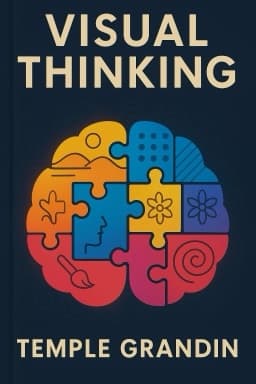
Why Schools Are Failing Visual Thinkers—and How That Threatens Our Future
A deep dive into the educational blind spots that exclude visual learners and the urgent reforms needed to save innovation and industry.

Education is the foundation of a thriving society, yet it is failing a vital segment of learners: visual thinkers. These individuals process information through images and spatial understanding rather than words and abstract symbols. Despite their talents, many are sidelined by curricula that prioritize verbal and abstract reasoning, particularly algebra and standardized testing.
Hands-on classes like woodworking, metal shop, home economics, and art once provided fertile ground for visual thinkers to discover their strengths and develop practical skills. Since the 1990s, these programs have been drastically cut due to budget constraints and shifting educational priorities. The result? A generation of students disengaged and underserved, and a looming shortage of skilled tradespeople essential for infrastructure and industry.
Algebra, often a gatekeeper subject, poses a significant barrier. Many visual thinkers struggle with its abstract nature, which lacks concrete imagery to anchor understanding. This mismatch leads to high failure rates and forces talented individuals out of STEM fields and skilled careers.
The consequences ripple beyond education. Manufacturing plants increasingly import complex machinery from Europe, reflecting a domestic loss of hands-on expertise. Countries like Switzerland combat this with robust apprenticeship programs that blend work and study, ensuring youth gain practical skills and steady employment.
Neurodiversity research underscores the need for education systems to adapt. Visual thinkers, including many on the autism spectrum, bring unique problem-solving abilities that fuel innovation. Embracing their strengths requires flexible curricula, alternative math pathways like statistics or applied geometry, and renewed investment in vocational education.
Failing to address these educational blind spots risks economic stagnation, infrastructure decay, and lost human potential. By reimagining education to nurture all minds, we build a future where every learner can thrive and contribute meaningfully.
Sources: Temple Grandin’s 'Visual Thinking', Rethink Care on neurodiverse workforce, Deloitte Insights on innovation and inclusion, Route Fifty on VR in education 1 2 3 4
Want to explore more insights from this book?
Read the full book summary