
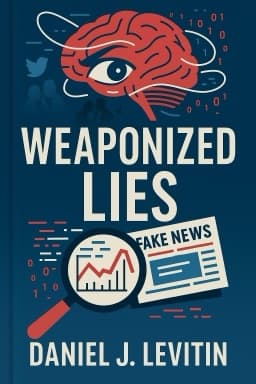
How Science and Logic Can Save You From Falling for Fake News
The ultimate toolkit to separate fact from fiction in today’s information jungle.

Fake news and misinformation thrive in a world where critical thinking is scarce. Science offers a robust methodology to seek truth: hypotheses must be falsifiable, meaning they can be tested and potentially disproven. This criterion separates science from opinion or pseudoscience.
Logical reasoning helps us avoid common errors. The post hoc fallacy mistakenly assumes that because one event follows another, the first caused the second. The cum hoc fallacy confuses correlation with causation. Recognizing these fallacies guards against jumping to false conclusions.
Bayesian reasoning allows us to update our beliefs as new evidence appears. For example, jurors reconsidering evidence during a trial embody this approach. This dynamic thinking contrasts with rigid certainty, enabling more accurate understanding.
By adopting scientific rigor and logical clarity, we equip ourselves to sift fact from fiction and navigate the complex landscape of modern information.
Want to explore more insights from this book?
Read the full book summary