
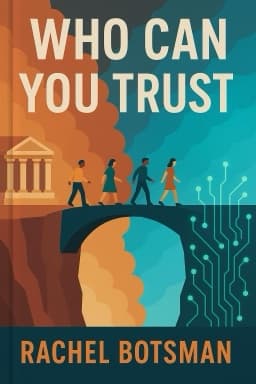
The Trust Revolution: How Our Social Fabric is Being Rewoven
A hopeful look at how trust is shifting from institutions to individuals and networks, transforming society and work.

We stand at the dawn of a profound transformation—a trust revolution that is reshaping the social fabric of our world. Traditional vertical trust structures, where institutions held centralized control, are giving way to horizontal, distributed trust networks. Power and influence flow through peer-to-peer connections, enabled by technology and changing cultural norms.
This shift is particularly evident in the workforce. Predictions indicate that within the next decade, half of workers will be independent contractors, freelancers, or gig economy participants. These workers rely on new trust mechanisms such as platform reputation systems, digital contracts, and community feedback rather than traditional employer-employee relationships.
The decentralization of trust offers remarkable opportunities for inclusion, innovation, and empowerment. It allows individuals to build their own reputations and collaborate globally. However, it also poses challenges around accountability, fairness, and social cohesion.
To thrive in this new era, societies must embrace ethical frameworks, invest in education about trust, and foster communities that prioritize transparency and integrity. The trust revolution is not just a technological change; it is a cultural and moral evolution that requires conscious participation.
By understanding and engaging with these shifts, we can build a future where trust is more resilient, inclusive, and empowering for all.
Want to explore more insights from this book?
Read the full book summary