
10 Mind-Blowing Reasons You’re Wired to Make Mistakes—And How to Turn Them Into Superpowers!
Unlocking the Hidden Science Behind Everyday Errors and How to Grow From Them

Unlocking the Hidden Science Behind Everyday Errors and How to Grow From Them
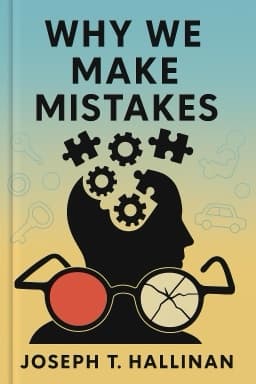
Have you ever left your house, only to double back because you weren’t sure if you locked the door? Or walked into a room and instantly forgotten why you were there? It’s easy to blame yourself for these everyday blunders, but what if I told you that your brain is wired to make mistakes? Joseph T. Hallinan’s 'Why We Make Mistakes' is a captivating exploration of why errors are not just common—they’re an essential part of being human.
Let’s start with perception. Our senses are not high-definition cameras; they’re more like impressionist painters, capturing the gist but missing the details. This is why you can look right at something and not see it—think of the famous 'change blindness' experiments, where people failed to notice when the person they were talking to was swapped for someone else mid-conversation. Our brains filter out what seems unimportant, focusing on what matters most at the moment.
Memory is another culprit. We trust our minds to store passwords, appointments, and names, but research shows that most people forget new passwords within weeks. Even faces—something we’re surprisingly good at remembering—can slip through the cracks if we’re distracted or stressed. The book reveals that our minds are tuned for meaning, not minutiae, which is why we remember faces for decades but forget names almost instantly.
But why do we make the same mistakes repeatedly? Enter heuristics—mental shortcuts that help us make quick decisions but often lead us astray. We skim news articles, rely on first impressions, and trust our gut even when it’s wrong. Experts, ironically, are often more prone to certain errors because they rely on patterns and expectations. A proofreader can miss glaring typos because their brain fills in what they expect to see.
Beneath these errors lurk powerful biases. Anchoring bias, for example, means the first number or idea you encounter can shape all your subsequent decisions. If you see '4 for $1' instead of '25 cents each,' you’re likely to buy more. First impressions stick, even when changing your mind would help. Overconfidence keeps us clinging to our initial answers on tests, despite evidence that switching is usually beneficial.
Our social world magnifies mistakes. We notice more about people who are like us—a phenomenon called similarity bias. Eyewitness errors are shockingly common, especially when the suspect is from a different group. Context matters, too: students who learn underwater recall information better underwater, and those who learn on land do better on land. Our memories are woven into the fabric of our surroundings and emotions.
So how can we make fewer mistakes? Hallinan’s answer is both practical and hopeful. Small changes—like using checklists, standardizing controls, and encouraging open discussion of errors—can dramatically reduce mistakes in medicine, aviation, and everyday life. Sleep and happiness matter, too; well-rested, happy people make better decisions and remember more.
Perhaps the most powerful lesson is to embrace your mistakes. Reflection and self-compassion turn errors into lessons, not burdens. Organizations that encourage people to share their mistakes foster trust and continuous improvement. Every misstep is a chance to learn, grow, and help others do the same.
In the end, 'Why We Make Mistakes' is not just about avoiding errors—it’s about understanding, accepting, and growing from them. The next time you forget a name or make a snap decision, remember: you’re not broken. You’re beautifully, wonderfully human.
Sources: 1 , 2 , 3
Want to explore more insights from this book?
Read the full book summary