
Unlock Your Brain’s Secret Love for Stories: How Neuroscience Reveals the Magic Behind Every Page
Discover the hidden biological wiring that makes storytelling our most powerful tool for connection and survival.

Have you ever wondered why stories grip us so powerfully? Why a compelling tale can transport us across time and space, making us feel joy, fear, or hope as if we lived it ourselves? The answer lies not in mere entertainment but in the very wiring of our brains. Our ancestors depended on stories to survive, to share vital knowledge, and to simulate dangers without facing them directly.
Every second, our senses receive over 11 million pieces of information, yet our conscious mind processes only about 40 bits at a time. This incredible filtering mechanism ensures we focus on what truly matters. Stories provide the perfect framework, organizing sensory input into meaningful sequences that the brain can easily digest.
Imagine a narrative as a glowing yardstick, giving shape and purpose to every event. Without clear focus—a protagonist’s goal, a thematic point, and internal conflict—stories meander, losing the reader’s attention and dopamine-driven anticipation. This focus acts as a compass, guiding readers through the emotional landscape and keeping them invested.
Emotion is the soul of storytelling. Neuroscience reveals that mirror neurons allow readers to feel characters’ emotions as if they were their own, creating a visceral connection. Writers achieve this by showing emotions through body language, subtle cues, and internal thoughts rather than telling, allowing readers to discover feelings organically.
Goals and agendas drive story momentum. Whether a protagonist seeks to win a competition or find self-acceptance, these objectives create suspense and give meaning to obstacles. Internal conflicts—fears, doubts, psychological barriers—add depth, making characters relatable and their journeys compelling.
Specificity is key. Abstract themes like love or survival transform into vivid experiences when grounded in concrete sensory details—a cracked watch, a blooming flower, the scent of rain. These details activate multiple brain regions, enhancing immersion and emotional resonance.
Conflict is the engine of change. The brain naturally resists change, so conflict forces characters to grow and evolve. Without it, stories stagnate. Effective conflict escalates, blending external challenges with internal struggles to maintain tension and drive transformation.
Logical cause-and-effect sequences satisfy the brain’s craving for pattern and meaning. Each event must flow naturally from the previous, avoiding randomness that confuses and disengages readers. Foreshadowing, flashbacks, and subplots enrich the narrative, weaving layers of meaning and anticipation.
Finally, rewriting is the writer’s secret weapon. Stories rarely emerge fully formed. Through revision, writers sharpen focus, deepen emotion, and align narrative elements, transforming raw drafts into compelling journeys that resonate long after the last page.
Understanding these neuroscience-backed storytelling principles empowers writers to craft stories that captivate, heal, and inspire. Your brain is wired for story—now it’s your turn to unlock its magic.
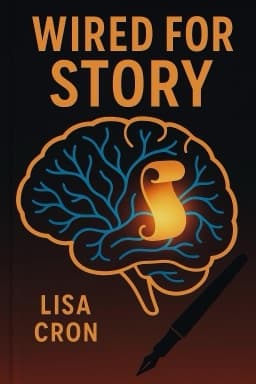
For more insights, explore works like "Wired for Story" by Lisa Cron and "The Science of Storytelling" by Will Storr, which blend psychological research with practical writing advice, illuminating the art behind the science of narrative. 1 4
Want to explore more insights from this book?
Read the full book summary