
Unlock the Power of Empathy in Writing: Connect with Your Busy Audience Today
How understanding your reader’s world can transform your writing from ignored to impactful.

Writing is not just about words on a page; it’s about connection. When you write with empathy, you bridge the gap between your intentions and your reader’s experience, especially when your audience is busy and distracted.
What Does Empathy in Writing Mean?
Empathy involves understanding and respecting your reader’s perspective, needs, and constraints. Busy readers have limited time and cognitive resources. They face constant distractions and must quickly decide what to read and what to ignore. Writing without empathy risks alienating them with confusing, lengthy, or poorly structured messages.
Applying Empathy to Your Writing
- Clarify Your Purpose: Know exactly what you want your reader to learn or do.
- Simplify Language: Use clear, common words and short sentences.
- Design for Easy Navigation: Use headings, bullet points, and lead with key information.
- Respect Cognitive Limits: Keep messages concise and focused.
- Format Thoughtfully: Use bold and highlights sparingly to guide attention.
Why Empathy Matters
Empathetic writing builds trust and credibility. Readers feel respected and understood, which increases engagement and response. It also reduces misunderstandings and frustration, making communication more effective.
Empathy transforms writing from a one-way transmission into a dialogue, even when it’s asynchronous. It invites readers in, making them more likely to listen, understand, and act.
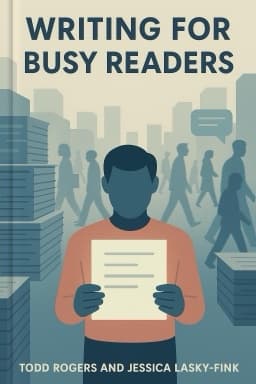
To dive deeper into empathetic writing and how to master it for busy readers, Todd Rogers’ "Writing for Busy Readers" offers research-backed insights and practical guidance.
Sources: Todd Rogers, Writing for Busy Readers; Stanford Graduate School of Business; DM Group Research [[0]](#__0) [[1]](#__1) [[2]](#__2)
Want to explore more insights from this book?
Read the full book summary