
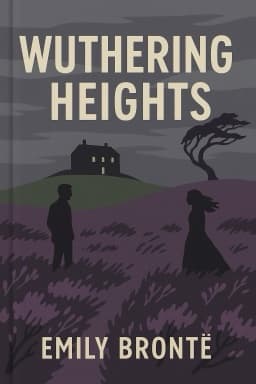
Why Wuthering Heights Is Still the Most Haunting Love Story Ever Written
Unpacking the Timeless Obsession and Dark Romance That Keeps Readers Spellbound

Unpacking the Timeless Obsession and Dark Romance That Keeps Readers Spellbound
Few novels have captured the human imagination as fiercely as Emily Brontë’s Wuthering Heights. Published in 1847, this tale of wild love and bitter revenge has survived the test of time, inspiring countless adaptations, debates, and devoted fans. But what is it about this book that continues to haunt readers nearly two centuries later?
The story centers on Heathcliff and Catherine, two souls bound together by a passion so intense that it transcends the boundaries of life and death. Their love is not gentle or redemptive; it is obsessive, destructive, and inescapable. From the moment Heathcliff is brought to Wuthering Heights as a foundling, the fates of both households—Wuthering Heights and Thrushcross Grange—are set on a collision course. Catherine’s famous declaration, “I am Heathcliff,” speaks to a union so complete that individuality is lost. Yet, it is precisely this loss of self that leads to tragedy.
The Yorkshire moors play a crucial role, not just as a setting but as a living, breathing force that shapes the characters’ destinies. The wildness of the land mirrors the wildness of their emotions. Storms rage outside as tempests of jealousy and longing rage within. The gothic atmosphere—complete with ghostly apparitions, locked doors, and windswept graves—creates a sense of unease that lingers long after the final chapter.
Brontë’s narrative structure, with its story-within-a-story and unreliable narrators, adds to the novel’s sense of mystery. We are never quite sure where reality ends and fantasy begins. The supernatural elements, especially the famous scene where Catherine’s ghost appears at the window, blur the line between the living and the dead, suggesting that some loves are too powerful to be contained by mortal boundaries.
But the real genius of Wuthering Heights lies in its psychological depth. Heathcliff is both villain and victim, his cruelty born from a lifetime of rejection and pain. Catherine is both muse and destroyer, torn between her desire for social acceptance and her longing for true connection. Their story is a cautionary tale about the dangers of unchecked passion, but also a testament to love’s enduring power.
What makes this love story so haunting is its refusal to offer easy answers. There is no neat resolution, no promise of happiness ever after. Instead, Brontë leaves us with a sense of awe at the capacity of the human heart—for both destruction and devotion. It’s a book that asks us to confront our own deepest fears and desires, and that’s why it continues to resonate, generation after generation.
Whether you read Wuthering Heights as a love story, a ghost story, or a psychological thriller, there’s no denying its power. It’s a novel that dares you to look into the darkest corners of the soul—and find beauty there.
Want to explore more insights from this book?
Read the full book summary