Emily Brontë
A haunting tale of love, revenge, and the supernatural on the Yorkshire moors.
Emily Brontë published Wuthering Heights under the pseudonym 'Ellis Bell.'
4 more facts available in the app
Section 1
9 Sections
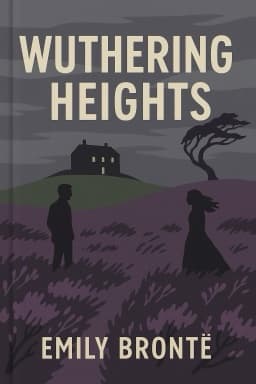
Imagine a world where the wind never rests, where the sky is always poised between storm and calm, and every stone on the moor holds a secret. This is where our journey begins, at the threshold of Wuthering Heights—a house as wild and unyielding as the landscape that surrounds it.
Mr. Lockwood, our guide, is a man seeking solitude, but what he finds is anything but peaceful isolation. On his first approach to Wuthering Heights, he is greeted by suspicious eyes, snarling dogs, and an air thick with unspoken stories. The house stands like a fortress, battered by years of wind and weather, its very stones seeming to whisper of old feuds and lost loves.
Lockwood’s initial discomfort is palpable—he is an outsider in every sense, both to the land and to the tangled relationships he is about to uncover. The household is a puzzle: a brooding master, a bitter young woman, a silent, watchful servant. Even the dogs seem to guard more than the door. Yet, beneath the chill, there is an invitation: to look closer, to listen for the stories that echo through the halls.
The moors themselves are almost a character, their wildness reflecting the untamed emotions that will soon be revealed. They offer freedom to some, but to others, they are a prison of wind and loneliness.
As we end this first step on our journey, let the wind carry us forward—to the next chamber of this haunted house, where the echoes of old sorrows and joys await, and where the story truly begins to unfold.
What does the word 'Wuthering' signify in the novel?
17 more quizzes available in app
The moors shape the mood and destiny of the story.
7 more insights available in app
Unlock all 9 sections, 8 insights, full audio, and interactive mind map in the SnapBooks app.
Unpacking the Timeless Obsession and Dark Romance That Keeps Readers Spellbound
Read articleUnveiling the Mysteries and Hidden Details Behind Brontë’s Masterpiece
Read article