
7 Mind-Blowing Psychological Tricks Your Brain Plays on You (And How to Outsmart Them)
From superstitions to self-deception, uncover the surprising ways your brain tricks you daily and how to fight back.

Your brain is a master of storytelling, constantly creating narratives that shape your reality. But sometimes, these stories are more fiction than fact, leading to errors in judgment and decision-making. Let’s explore seven psychological tricks that reveal just how crafty your mind can be.
1. Narrative Bias: Your Memory is a Story, Not a Video
Your memories aren’t static snapshots but dynamic reconstructions influenced by your current beliefs and emotions. This means your past changes every time you recall it. Imagine three men each convinced they are the same historical figure, defending their identity despite conflicting evidence. This shows how personal narratives can resist change.
2. The Common Belief Fallacy: Popular Doesn’t Mean True
Believing something just because many others do is a mental trap. From myths like 'fan death' to outdated scientific theories like phlogiston, history is littered with widely accepted but false beliefs. The scientific method helps us challenge these errors by demanding evidence and disproof.
3. The Benjamin Franklin Effect: How Doing Favors Changes Feelings
If you do a favor for someone you dislike, you might end up liking them more. This happens because your brain tries to reduce the discomfort of acting against your beliefs by changing your attitude. This insight explains why behavior can shape belief.
4. The Post Hoc Fallacy: Mistaking Sequence for Causation
Because one event follows another, we often assume the first caused the second. This leads to superstitions like lucky charms and placebo buttons that don’t actually work but feel powerful.
5. The Halo Effect: When One Trait Colors Everything
Physical attractiveness or height can bias your perception of a person’s other traits, like intelligence or trustworthiness. This unconscious bias affects hiring, social interactions, and more.
6. Ego Depletion: Willpower is a Limited Resource
Your self-control can get tired like a muscle. After exerting discipline, you’re more vulnerable to temptation. Social rejection also drains this resource, but rest and positive emotions can restore it.
7. Enclothed Cognition: Clothes Change Your Mind
Wearing symbolic clothing like a lab coat can improve your focus and confidence. Clothes are more than fabric; they prime your brain to think and behave differently.
Understanding these psychological tricks gives you the power to recognize when your brain is leading you astray. By becoming aware, you can take steps to think more clearly, resist false beliefs, and make better decisions. Your mind’s quirks are not flaws but features—learning them is the key to mastering your own story.
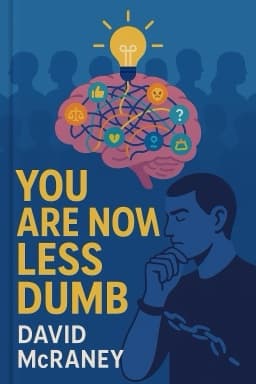
Insights in this blog are inspired by the book You Are Now Less Dumb and a wealth of psychological research on human cognition and behavior. 1 3 4
Want to explore more insights from this book?
Read the full book summary