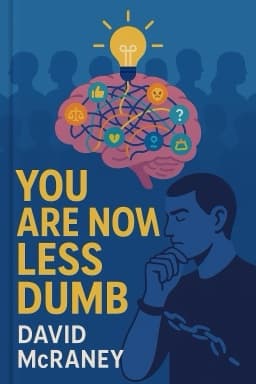
David McRaney
A compelling guide to understanding and overcoming the common cognitive biases and self-delusions that impair human reasoning.
The book is a sequel of sorts to David McRaney's earlier work, 'You Are Not So Smart.'
Section 1
7 Sections
Imagine a world where everyone watching the same event sees a completely different version of it, colored by their own beliefs and loyalties. This isn’t a fantasy but a reality of how our minds operate.
Take the example of three men, all convinced they are the reincarnation of the same figure, each defending their identity fiercely despite being confronted with contradictory evidence. Their delusions show the power of narrative bias: even when faced with clear facts, our minds cling to the stories that uphold our sense of self. This phenomenon extends beyond mental illness to everyday life, where our memories are not video recordings but reconstructions influenced by our current feelings and beliefs.
Our preference for stories explains why detailed accounts, even if improbable, feel more believable than simple facts. When we hear about a person’s strange behavior, we are more likely to accept a story that explains it, even if it includes unlikely elements, because it fits our need for cause and effect. This tendency can lead to conjunction fallacies, where adding details seems to increase the likelihood of an event, despite statistical improbability.
Understanding narrative bias helps us see why eyewitness testimony is often unreliable and why people maintain conflicting versions of reality. It also reveals the fragility of what we call the self—a story we tell ourselves to create continuity and meaning. Without narrative, our sense of identity would dissolve into chaos. Yet, this storytelling comes at a cost: it blinds us to alternative perspectives and entrenches false beliefs.
As we move forward, we will explore how these stories interact with other cognitive biases and social influences, shaping our decisions and behaviors in ways we rarely notice. Recognizing the narratives we live by is the first step toward becoming less dumb and more aware of the beautiful complexity of our minds.
Now, let’s delve into how the crowd and the consensus can mislead us, even when we think many people agreeing means truth.
What is the main reason humans prefer to understand life through narratives?
13 more quizzes available in app
Our minds prefer stories to raw data, shaping our perception and memory.
8 more insights available in app
Unlock all 7 sections, 9 insights, full audio, and interactive mind map in the SnapBooks app.
Discover the hidden mental traps that cloud your judgment and learn science-backed ways to reclaim clarity and control.
Read articleFrom superstitions to self-deception, uncover the surprising ways your brain tricks you daily and how to fight back.