
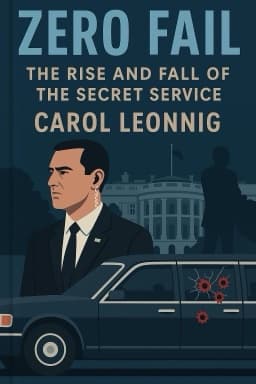
Inside the Secret Service: Shocking Truths Behind the Shield of the Presidency
Unveiling the Untold Stories of America's Most Elite Protection Agency

The United States Secret Service, often shrouded in mystery and myth, has a history as complex as it is critical to the survival of American democracy. Founded in 1865, its initial mission was far removed from the glamorous image of presidential protectors that the public knows today. Originally, the agency was created to combat the rampant counterfeiting that threatened the fragile post-Civil War economy. This financial crime focus defined its early years, with agents working tirelessly to stamp out counterfeit currency that could unravel the nation’s recovery.
It was only after the assassination of President Abraham Lincoln that the Secret Service began to take on a protective role, albeit unofficially and somewhat reluctantly. The tragic deaths of Presidents Garfield and McKinley further exposed the glaring security gaps that plagued the presidency. Yet, it was not until the assassination of McKinley in 1901 that Congress formally tasked the Secret Service with the responsibility of presidential protection. This reactive evolution underscores the agency’s origins in crisis rather than foresight.
Fast forward to the 1960s, and the agency faced new challenges under President John F. Kennedy. Kennedy’s charm and relentless public engagement strained the Secret Service to its limits. His frequent travels, spontaneous public appearances, and disregard for security protocols created vulnerabilities that agents struggled to manage. Behind the scenes, agents often turned a blind eye to risky behaviors, including the president’s private liaisons, highlighting the tension between professional duty and personal loyalty.
The tragic assassination of JFK in Dallas in 1963 marked a dark moment for the agency. Critical intelligence failures, understaffing, and even agent misconduct such as drinking before duty contributed to the inability to prevent the attack. This event forced the Secret Service into a painful reckoning, exposing deep flaws in preparedness, culture, and resource allocation. The emotional toll on agents was profound, with many grappling with guilt and trauma long after the tragedy.
In the aftermath, the agency struggled to heal amidst political skepticism and budgetary constraints. Leadership figures like Chief James Joseph Rowley played a crucial role in stabilizing the agency and advocating for necessary reforms, including enhanced training and modernization of threat databases. However, the agency’s challenges did not end there. The Nixon era brought political manipulation and internal conflicts, while the post-9/11 world demanded a seismic shift in mission scope, incorporating counterterrorism and cyber threats alongside traditional protective duties.
Despite these adaptations, the Secret Service has faced scandals and morale crises in recent decades. Notable incidents such as the prostitution scandal in Cartagena and multiple White House security breaches have damaged the agency’s reputation and raised questions about operational effectiveness. Agents have reported low morale due to poor leadership, high stress, and political interference, with some calling publicly for sweeping reforms to restore the agency’s integrity and professionalism.
The Trump administration era further complicated the agency’s culture, with political loyalty increasingly influencing promotions and assignments, undermining meritocratic principles. The expansion of protective responsibilities to include extended family members and political opponents has stretched resources thin, intensifying operational challenges.
As the Secret Service stands at a crossroads, the urgent need for cultural and structural reform is clear. The agency’s storied past is a testament to resilience and dedication, but it also reveals vulnerabilities that must be addressed to protect the presidency and the nation effectively in the future. This complex narrative highlights the human element behind the badge—the agents who serve with honor amidst immense pressure and the institution that must evolve to meet the demands of an ever-changing security landscape.
For those fascinated by the hidden stories of power, protection, and politics, the rise and fall of the Secret Service offers a compelling journey through American history’s most pivotal moments.
Sources: The New York Times review of 'Zero Fail' by Carol Leonnig, Rutgers University book analysis, People.com coverage of Secret Service scandals, Goodreads insider accounts.
Want to explore more insights from this book?
Read the full book summary