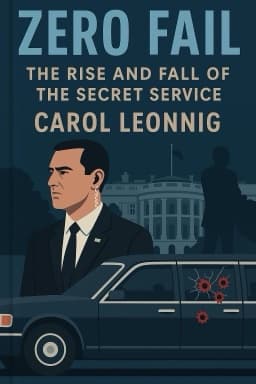
Carol Leonnig
An investigative chronicle revealing the rise, fall, and challenges of the U.S. Secret Service across decades of presidential protection.
The Secret Service was originally created to combat counterfeit currency, not to protect presidents.
2 more facts available in the app
Section 1
8 Sections
Imagine a nation emerging from the ashes of civil war, struggling to regain its footing economically and politically.
Yet, fate had other plans for this fledgling agency. The assassination of President Abraham Lincoln in 1865 exposed a glaring vulnerability in the security of the nation’s highest office.
Early leadership played a pivotal role in shaping the agency’s trajectory. Figures like William Wood brought military discipline and investigative zeal, while others like Hiram C. Whitley expanded the agency’s reach into various federal crimes. Yet, even in its infancy, the agency was not immune to scandal. The forced resignation of Whitley amid allegations of complicity in a burglary scandal in 1874 dealt a blow to the agency’s reputation, reminding us that institutions are shaped as much by their human flaws as by their missions.
Despite these early challenges, the Secret Service began to build a foundation of duty and resilience. Agents worked long hours with limited resources, learning on the job and adapting to new responsibilities thrust upon them by history’s harsh lessons.
This opening chapter of our journey sets the stage for understanding how the agency’s origins in crisis and duty planted the seeds for both its proud legacy and the challenges it would face. As we move forward, we will explore how high-profile assassination attempts tested the agency’s mettle and spurred critical reforms that shaped its evolution.
What was the original primary mission of the Secret Service when created in 1865?
13 more quizzes available in app
The agency was born out of necessity to protect the financial system.
8 more insights available in app
Unlock all 8 sections, 9 insights, full audio, and interactive mind map in the SnapBooks app.
Unveiling the Untold Stories of America's Most Elite Protection Agency
Read articleA Deep Dive into the Missteps That Have Shaken America’s Protective Shield
Read article
Neil Postman
Nick Bostrom
Temple Grandin

Steven Pinker
