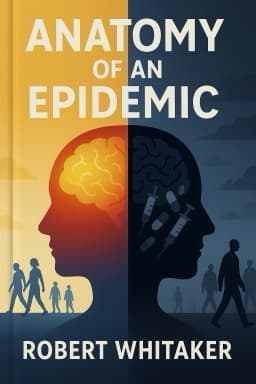
Robert Whitaker
A critical investigation into psychiatric drugs revealing their role in the rise of chronic mental illness and calling for honest reform.
The chemical imbalance theory of mental illness, widely popularized, has been scientifically disproven.
Section 1
10 Sections
Imagine a world where medicine has made miraculous strides — antibiotics have tamed deadly infections, vaccines have wiped out scourges, and new drugs promise relief for mental suffering. Yet, in this very world, a quiet epidemic grows, hidden beneath the surface of progress.
In 1955, only about one in every 468 Americans was hospitalized due to mental illness. Fast forward to 2007, and the number of adults receiving disability payments for psychiatric conditions had jumped to one in every 76 — a sixfold increase. Even more startling, children, once spared from such diagnoses, now represent a growing share of this burden. From just over 16,000 children on disability rolls in 1987, the number exploded to over half a million by 2007.
This rise is not simply a reflection of better diagnosis or reduced stigma — it is a shadow cast by the very treatments hailed as breakthroughs. Psychiatric drugs, introduced with great hope, promised to transform lives, yet the disability rates tell a different story. Families, schools, and communities now grapple with an increasing number of children diagnosed with disorders like ADHD and bipolar illness, often medicated with powerful drugs from a young age.
At support groups across the country, individuals share stories of struggle — some find relief in medications, others lament side effects and persistent symptoms. A common theme emerges:
As we embark on this journey, we must hold space for complexity and nuance. The rise in mental illness disability is a societal challenge that touches millions of lives. It demands an honest examination of science, history, and human experience. Only by confronting this paradox can we hope to find a path forward — one that honors both the promise of medicine and the resilience of the human spirit.
Let us now turn to the origins of psychiatric drugs — how they were discovered, how they came to be seen as magic bullets, and what that story reveals about our hopes and illusions.
What surprising trend does the data from 1955 to 2007 reveal about mental illness?
19 more quizzes available in app
Disability due to mental illness has risen sharply over decades.
8 more insights available in app
Unlock all 10 sections, 9 insights, full audio, and interactive mind map in the SnapBooks app.
Unveiling the paradox of rising mental illness despite decades of psychiatric drug use
Read articleDebunking the most popular explanation for mental illness and its impact on treatment
Read article