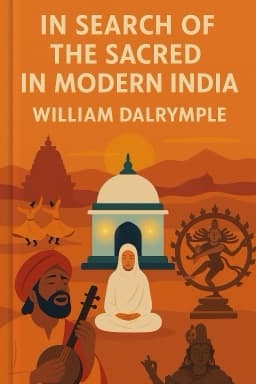
William Dalrymple
A rich, immersive journey through the diverse sacred traditions and spiritual life of modern India and its neighbors.
The Bauls of Bengal reject caste distinctions and orthodox religious rituals, focusing instead on personal spiritual experience.
Section 1
7 Sections
In the arid deserts of Sindh, where the sands meet the fertile banks of the Indus, a mystical dance unfolds every evening, a dance that is more than mere movement — it is a bridge between worlds, a celebration of divine love that transcends man-made divisions.
This dance is not just ritual; it is a profound act of communal healing. Physical ailments that resist medical treatment are believed to dissolve here, replaced by peace and hope. The shrine's syncretic nature is remarkable — a Hindu sajjada nasheen opens the annual ’Urs festival, and Hindu pilgrims tend the lamps and offer water alongside Muslim devotees.
Amidst this vibrant tapestry stands Lal Peri Mastani, the Ecstatic Red Fairy — a woman whose bright red robes and imposing wooden club make her unmistakable. She is a living symbol of refuge and resilience, a triple refugee who found sanctuary in the shrine’s embrace. Her story is one of loss and survival, of finding unconditional love not in the world but in the divine presence she feels with Lal Shahbaz.
Yet, this oasis of spiritual freedom faces threats. The rise of puritanical Wahhabi and Deobandi movements seeks to dismantle these heterodox practices, condemning shrine worship and music as heresy. Madrasas spread their influence, preaching a return to strict textual Islam and rejecting the syncretic traditions that have flourished here for centuries. But the Sufi community remains steadfast, their faith in love and forgiveness a balm against intolerance.
At the heart of this struggle lies a deeper conflict — between an Islam that embraces the mystical and the personal, and one that demands rigid adherence to law and ritual. The Sufis teach that Paradise lies within the human heart, a place of eternal love and union with the divine, while their critics insist on a physical heaven beyond this world.
As the sun sets and the dhammal begins anew, one can witness the power of music, dance, and devotion to heal not only bodies but souls, to bring together communities divided by history and politics. This is a story of spiritual resilience, of a sacred dance that defies the harsh winds of change, inviting all who come to find the divine within themselves.
Let us now journey from the desert shrines of Sindh to the lush floodplains of Bengal, where another mystical tradition sings the song of the heart in a language of love and freedom.
What is the primary purpose of the dhammal dance at Sufi shrines?
13 more quizzes available in app
Sufi shrines in Sindh embody a blending of Hindu and Muslim traditions, emphasizing love and personal connection to the divine over rigid orthodoxy.
7 more insights available in app
Unlock all 7 sections, 8 insights, full audio, and interactive mind map in the SnapBooks app.
Discover the enchanting world of Sindh’s Sufi shrines where music, trance, and interfaith devotion create a spiritual oasis.
Read articleStep into the world of Bengal’s Bauls — wandering mystics who reject caste and orthodoxy to find God within through music and love.
Read article