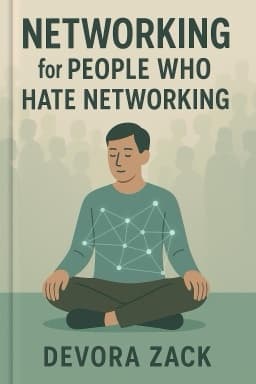
Devora Zack
A practical guide empowering introverts and the overwhelmed to network authentically and effectively on their own terms.
Introverts make up nearly 50% of the population, contrary to older beliefs that they were a minority.
Section 1
7 Sections
Imagine stepping into a room filled with people, but instead of feeling energized, you feel your energy draining, your mind racing, and your heart pounding. This is a familiar scene for many who dislike networking. Yet, the key to transforming this experience lies not in forcing yourself to become someone else, but in embracing who you truly are.
For years, society viewed introverts as a minority, shy or socially awkward types to be fixed or changed. However, recent insights reveal that introverts make up nearly half the population. This means that the world is equally balanced between those who recharge through solitude and reflection and those energized by social interaction. Centroverts, a fascinating group in the middle, blend traits of both, flexing between reflection and sociability as needed.
Think of introverts as deep rivers flowing quietly beneath the surface, rich with thought and meaning, while extroverts resemble lively streams dancing openly in the sun. Centroverts are the confluence where these waters meet, blending depth with vivacity. Recognizing where you fall on this spectrum helps you tailor your networking approach to fit your rhythm rather than swim against the current.
Consider the power of reflection, a hallmark of introversion. Introverts think before they speak, carefully weighing words and ideas. This patience and depth allow them to form meaningful, lasting connections rather than fleeting acquaintances. Extroverts, on the other hand, think out loud, processing ideas through conversation, thriving on variety and quantity in their social circles.
Labels like 'shy' or 'outgoing' fail to capture this complexity. Many introverts are confident, articulate, and even enjoy public speaking when given time to prepare. The distinction lies not in ability but in preference for how energy is gained and spent.
For example, a seasoned runner who enjoys solitary long-distance runs embodies introverted strengths—focus, endurance, and a preference for internal dialogue. Similarly, an introverted speaker may captivate audiences with well-prepared, thoughtful presentations, debunking myths that introversion limits public engagement.
Understanding these nuances is like having a map in unfamiliar terrain. It guides you to the paths best suited for your style, helping you build connections that resonate deeply and sustainably. As we journey forward, keep this foundation in mind, for the next step explores why networking often feels daunting and how rewiring your mindset can transform your experience.
Let us now delve into the roots of our networking discomfort and uncover the physiological and psychological barriers that hold us back.
What percentage of the population is introverted according to recent studies?
13 more quizzes available in app
People exist on a spectrum from introversion to extroversion, with centroverts in between.
8 more insights available in app
Unlock all 7 sections, 9 insights, full audio, and interactive mind map in the SnapBooks app.
Discover the secret power of introverts and how to network authentically without draining your energy
Read articleUncover the hidden reasons why generic networking tips drain introverts and discover personalized methods that truly empower
Read article
Ali Abdaal

Dick Schaefer; Pamela Espeland

Robin Sharma

Jeff Haden
