Let me invite you to the beginning of a journey—a journey into the shadows and light of human nature, where the boundaries between good and evil are far more fluid than we often care to admit. We like to think of ourselves as steadfastly moral, immune to the temptations or pressures that might sway others. Yet, history and psychology whisper a different truth.
Imagine a world where evil is not an external force, but a set of choices—sometimes so small, so ordinary, that we hardly notice them. We are taught to see evil as the domain of monsters, of the 'other,' but what if the capacity for harm lies dormant in each of us, waiting for the right moment, the right situation? This is the chilling, yet ultimately hopeful, insight that emerges from the study of human behavior.
Cultural myths have always painted evil as something outside ourselves: the devil lurking in the shadows, the enemy at the gates, the witch in the woods. These stories comfort us, making evil seem distant and rare. But the real story, as shown by countless experiments and real-world events, is that the line between good and evil is permeable—anyone can cross it, sometimes without even realizing it. Often, the journey begins with a single, minor compromise. A small lie. A moment of looking away. A shrug when someone else is mistreated. Each step seems harmless, but together, they can lead us far from where we began.
Consider the subtle power of self-serving bias. We rate ourselves as more honest, more moral, more upright than others. This illusion protects our ego, but it also blinds us to our own vulnerabilities. In moments of stress, anonymity, or group pressure, the cracks in our moral armor can widen. The truth is, none of us are entirely immune. This realization can be unsettling, but it is also the first step toward wisdom.
As we move deeper into this story, remember: evil is not always dramatic or obvious. Sometimes it is the quiet voice that tells us to stay silent, to go along, to look away. But if we understand the forces that shape our actions, we can learn to resist them. We can choose to be vigilant, compassionate, and brave.
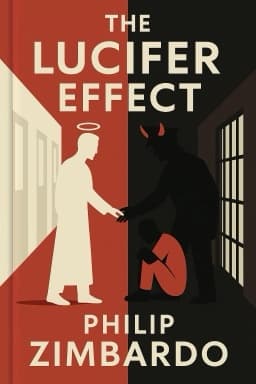
Let me take you further, into the heart of an experiment that revealed just how quickly ordinary people can become agents of cruelty. The stage is set for the next chapter: the Stanford Prison Experiment.