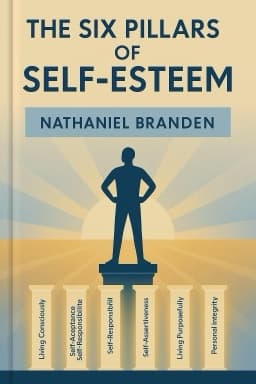
Nathaniel Branden
A foundational guide to understanding and cultivating self-esteem through six key practices essential for psychological health and personal success.
Nathaniel Branden is considered one of the pioneers in the modern self-esteem movement.
Section 1
10 Sections
Imagine a world where the foundation of your very being is the confidence that you can face life’s challenges and the deep-seated feeling that you deserve happiness. This is the essence of self-esteem, a concept far richer than mere self-confidence or fleeting feelings of pride.
Self-esteem acts like an immune system for our consciousness. Just as the body’s immune system shields us from physical illness, self-esteem protects our mental and emotional well-being. It equips us with resilience to bounce back from setbacks and face adversity with courage. When self-esteem is strong, we approach life with optimism and resourcefulness. When it falters, fear and doubt take hold, clouding our judgment and sapping our energy.
At its core, self-esteem has two inseparable components: self-efficacy and self-respect. Self-efficacy is the quiet yet powerful confidence in our ability to think, learn, and make decisions. It is the trust that we can navigate the complexities of life through our mind’s faculties. Self-respect, on the other hand, is the conviction that we are worthy of love, happiness, and fulfillment. It is the inner assurance that our existence matters and that we deserve to assert our needs and pursue our values.
Consider the subtle dance between these two pillars. When we believe in our competence, we are more likely to take initiative and persevere through challenges. When we feel worthy, we are more likely to seek meaningful relationships and stand up for ourselves. These components reinforce each other, creating a virtuous circle that fosters growth and well-being.
However, self-esteem is not static; it is a living process, continuously shaped by our actions and experiences. There is a dynamic feedback loop at work: how we act influences how we feel about ourselves, and how we feel about ourselves influences how we act. For example, if we trust our judgment and persist in our efforts, we are likely to succeed, which in turn strengthens our self-esteem. Conversely, if we doubt ourselves and give up easily, we may fail, which weakens our self-esteem further, creating a downward spiral.
Imagine a person who receives a promotion but feels unworthy and panics, sabotaging their performance. This is the destructive power of low self-esteem. On the other hand, someone with high self-esteem faces the same challenge with confidence and determination, increasing their chances of success.
As we embark on this journey of exploring self-esteem, remember that it is not a gift to be claimed passively but an achievement to be cultivated actively. It is the lifeblood of our psychological health and the key to unlocking our potential. The path ahead will illuminate the practices and principles that build this vital inner resource.
Let us now move deeper into the nature of self-esteem by exploring its dual components—self-efficacy and self-respect—and discover how they shape our experience of life.
What are the two core components of self-esteem?
19 more quizzes available in app
Self-esteem is not just a feeling but a fundamental psychological necessity that influences every aspect of life.
8 more insights available in app
Unlock all 10 sections, 9 insights, full audio, and interactive mind map in the SnapBooks app.
Discover the Six Pillars That Can Transform Your Life and Boost Your Confidence Beyond Limits
Read articleUnlocking the Psychological Secrets That Build Lasting Confidence and Well-Being
Read article