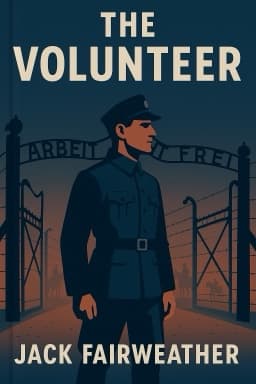
Jack Fairweather
A gripping biography of Witold Pilecki, who volunteered to infiltrate Auschwitz to expose Nazi atrocities and lead resistance from within.
Witold Pilecki volunteered to be imprisoned in Auschwitz, a unique act of bravery.
2 more facts available in the app
Section 1
8 Sections
As the shadows of war darkened Eastern Europe in August 1939, a man stood at the crossroads of history. In the quiet dawn of his family estate, he faced a choice that would define not only his life but echo through the ages. This was not a story of forced imprisonment or reluctant surrender. Instead, it was a story of a man who chose to walk into the lion’s den, to volunteer for a fate most would flee.
The Polish cavalry, often romanticized, was ill-prepared for the mechanized fury unleashed by the German army. Witold’s unit was a patchwork of peasants, some without horses, armed with bolt-action carbines and even bicycles. Yet, their resolve was unbroken. They faced tanks that thundered faster than horses could gallop and Stuka dive bombers that screamed death from above.
Witold’s decision to volunteer for Auschwitz was unprecedented. Most who entered the camp did so under duress, but he sought it out, driven by a fierce patriotism and a strategic mind that saw beyond immediate survival.
This section unfolds the opening act of a saga marked by sacrifice and hope. It reveals a man’s unwavering commitment to his country and the birth of a resistance that would defy the darkest of horrors. As we move forward, we will journey deeper into the camp’s gates and witness the resilience of the human spirit amidst unimaginable suffering.
What was unique about Witold Pilecki’s decision regarding Auschwitz?
15 more quizzes available in app
Choosing to enter the heart of the enemy’s terror to fight from within.
7 more insights available in app
Unlock all 8 sections, 8 insights, full audio, and interactive mind map in the SnapBooks app.
Discover the astonishing true story of Witold Pilecki, the Polish officer who chose to enter Auschwitz voluntarily to organize resistance and gather intelligence.
Read articleExplore the hidden story of the underground resistance within Auschwitz, its formation, struggles, and impact on the Holocaust narrative.
Caroline Weber

Philip Freeman
Benjamín Labatut
Greg King and Penny Wilson
