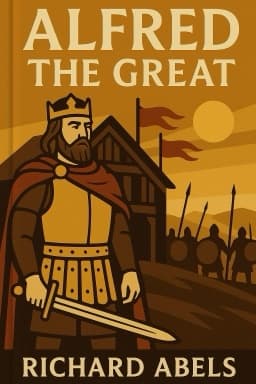
Richard Abels
A detailed history of Anglo-Saxon England focusing on Alfred the Great, early kingship, and the Christianization of the realm.
The Sutton Hoo ship burial is one of the richest Anglo-Saxon archaeological finds and is often linked to King Rædwald of East Anglia.
Section 1
7 Sections
Imagine a land once vibrant with Roman civilization, its towns bustling, roads connecting cities, and armies securing peace. Yet, within a single lifetime, this grandeur collapsed. The withdrawal of Roman legions left Britain exposed, its economy faltering, towns abandoned, and people left to fend for themselves.
The Romans had maintained order with well-equipped armies and infrastructure, but as their presence waned, so too did the stability. Coastal forts once manned by thousands became vulnerable. Saxon raiders, initially hired as mercenaries to fight northern enemies, soon turned their weapons against their British hosts, demanding land and tribute. Their arrival was not a simple invasion but a complex process of settlement and cultural transformation, marked by both conflict and coexistence.
Archaeological evidence reveals two distinct zones of Saxon influence in eastern Britain, with differing burial customs and artistic styles, suggesting a nuanced mosaic of identities. This period was one of fluidity and uncertainty, where old Roman ways faded and new powers emerged.
As we leave behind the ruins and treasures, we step into a world where kings rise from the ashes, shaping the future of England. Let us now explore how these early rulers forged kingdoms amid chaos and opportunity.
What was the primary reason for burying treasures like the Hoxne Hoard?
13 more quizzes available in app
The withdrawal of Roman forces and economic decline precipitated a societal collapse.
8 more insights available in app
Unlock all 7 sections, 9 insights, full audio, and interactive mind map in the SnapBooks app.
Journey through the Rise and Fall of Anglo-Saxon England and Discover How This Era Shaped Modern Britain
Read articleDiscover the Untold Stories of Power, Betrayal, and Faith Behind England’s Earliest Rulers
Read article