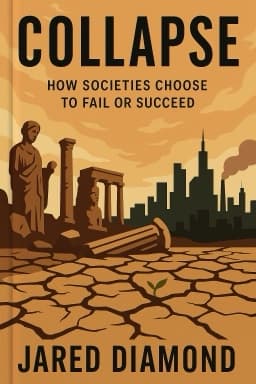
Imagine a world where the fate of entire civilizations hinges on the silent growth of forests, the gentle flow of rivers, and the richness of the soil beneath our feet. In this first chapter of our journey, let us explore the fragile dance between nature and the societies that depend on her bounty. Throughout history, from the lush valleys of the Maya to the windswept plains of Montana, people have learned—sometimes too late—that their prosperity is inseparable from the health of their environment.
When we walk among the ruins of once-great cities, we often marvel at their lost grandeur. Yet, beneath the stones and toppled columns, there are deeper clues—secrets told by layers of pollen, by the scars left in the earth, and by the bones of vanished animals. These clues whisper stories of forests that vanished under the axe, of rivers that ran dry, and of soils that slowly turned barren. It is in these subtle signs that we find the first warnings of collapse.
Consider the tale of two farms, separated by continents but united in their vulnerability. Both thrived in the shadow of mountains, both boasted advanced technology and bountiful pastures. Yet, while one flourished, the other faded into memory, its barns now empty, its people gone. What made the difference? Sometimes, it was the ability to recognize limits—a willingness to adapt before it was too late.
But adaptation is not always easy. The temptation to take just a bit more—one more tree, one more field, one more herd—can be overwhelming when abundance seems endless. Collapse is rarely a sudden catastrophe; more often, it is a slow unraveling, punctuated by moments of crisis that reveal how thin the thread of survival truly is.
By studying the past, we have a gift: the chance to see patterns, to compare societies that faced similar challenges but chose different paths. Some learned to live within their means, to cherish and restore the resources that sustained them. Others pressed on, blind to the warning signs, until the land could give no more.
This is not just a story of loss. It is also a story of hope, for within these lessons lies the power to choose differently. As we move forward, let us remember that every society is a natural experiment, and that our future can be shaped by the wisdom we draw from the past.
With this foundation, let us journey deeper into the ways societies respond to challenges, and how their choices echo across generations.