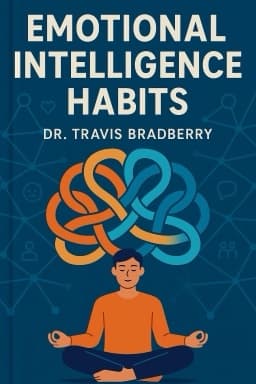
Dr. Travis Bradberry
A practical guide to developing emotional intelligence through actionable habits for personal and professional success.
Phineas Gage’s accident in 1848 was one of the first cases linking brain injury to changes in personality and emotional regulation.
2 more facts available in the app
Section 1
10 Sections
Imagine a man who survived a catastrophic accident where a heavy iron rod blasted through his skull, yet lived to tell the tale. This man, once calm, courteous, and reliable, returned changed—irritable, unpredictable, and unreliable. His story is a vivid testament to the power of emotional intelligence, rooted deep within the brain’s architecture.
Why does this matter? Because emotional intelligence is not just about feelings; it’s the invisible engine driving our behavior, relationships, and success. Studies reveal that emotional intelligence accounts for 58% of job performance, overshadowing IQ’s 20%. This means that your ability to understand and manage emotions is the strongest predictor of your effectiveness and leadership potential.
As we embark on this journey, remember that emotional intelligence is the bridge between feeling and thinking, a skill that allows you to navigate the complexities of human experience with grace and wisdom. This foundation will support all the habits and strategies we explore in the following sections, helping you build resilience, connection, and fulfillment.
Let us now turn to the personal side of emotional intelligence—how you can become more aware of your feelings and manage yourself with intention and control.
What brain area is primarily responsible for emotional intelligence?
19 more quizzes available in app
Emotional intelligence arises from the interaction between the limbic system and the prefrontal cortex.
8 more insights available in app
Unlock all 10 sections, 9 insights, full audio, and interactive mind map in the SnapBooks app.
Unlock the transformative power of emotional intelligence to thrive in today’s fast-paced world.
Read articleExplore fascinating scientific discoveries that reveal the hidden depths of emotional intelligence.
Read article
Ali Abdaal

Dick Schaefer; Pamela Espeland
Robin Sharma
Jeff Haden
