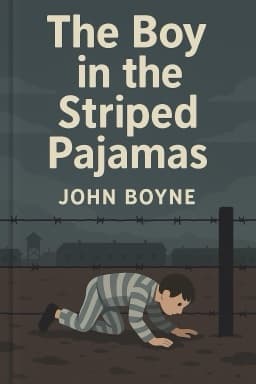
John Boyne
A poignant tale of friendship and innocence set against the horrors of the Holocaust.
John Boyne wrote the novel inspired by an image of two boys on either side of a fence.
1 more facts available in the app
Section 1
9 Sections
Imagine a young boy, with wide eyes and an open heart, returning home from school only to find his possessions being packed away by the family maid. This moment, filled with confusion and the stirrings of anxiety, marks the beginning of a profound upheaval in his life. The boy, Bruno, is only nine, and though he senses that something significant is happening, the full weight of the situation is beyond his grasp. His mother’s nervous demeanor and the hurried packing of his belongings speak volumes about the change that is to come, yet he clings to the hope that it might be an adventure rather than a loss.
Bruno’s world had been one of comfort and familiarity — a large house in Berlin, friends to play with, and a sense of security. But suddenly, all that is threatened by an invisible force, represented by his father’s important job which Bruno cannot fully understand. The move to a remote, desolate house far from the city is not just a change of address; it is a shift into a realm where innocence meets the shadows of a dark reality.
The way Bruno questions his mother about the move, about why they must leave, and about what his father actually does, reveals the tender naivety of childhood. He struggles to comprehend the significance of his father’s role, imagining it as something grand yet mysterious. This innocence is both his shield and his prison, protecting him from the harsh truths but also isolating him in confusion. He wonders about the future, about his friends left behind, and about the strange new place where there are no other children to play with.
As the crates are loaded, and the family prepares to leave their home, Bruno’s mind races with questions and fears. He imagines sliding down the banister one last time, a small act of joy amidst the looming change. Yet, the house he is about to enter is starkly different — isolated, cold, and surrounded by unfamiliar sights. The absence of neighbors, the silence of the streets, and the eerie emptiness foreshadow the challenges ahead.
This opening section sets the stage for a tale that is as much about the loss of childhood innocence as it is about the historical horrors that underpin the story.
Let us now move forward and explore the new house and the strange new world that awaits Bruno and his family.
What is Bruno's initial reaction to moving?
17 more quizzes available in app
Bruno's world shifts dramatically as his family moves from their comfortable home to an isolated new house, signaling the start of his journey into a harsher reality.
7 more insights available in app
Unlock all 9 sections, 8 insights, full audio, and interactive mind map in the SnapBooks app.
Exploring the chilling innocence and heartbreaking friendship that define a modern Holocaust classic
Read articleHow a simple fence reveals the complex divides of war and humanity
Read article
Bonnie Garmus
John Fusco
Kurt Vonnegut Jr.
Mark Twain
