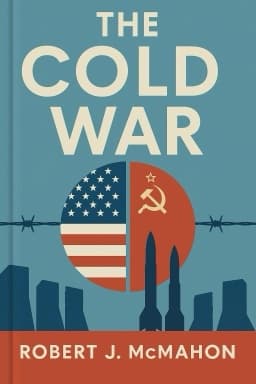
The Cold War did not emerge from nowhere—it was born from the ashes of the most destructive conflict humanity had ever seen. Imagine a world where entire cities were reduced to rubble, where families wandered through ruins in search of loved ones, and where the old certainties of power and order had vanished. This was the world of 1945. In the wake of World War II, over 60 million lives had been lost, two-thirds of them civilians. In places like Warsaw and Tokyo, the devastation was so complete that survivors described their cities as 'a breeding ground of pestilence and hate.' Europe and Asia were not just physically shattered; their social fabric was torn apart.
The United States, however, emerged from the war with its cities intact and its economy booming. While much of the world struggled with hunger and homelessness, Americans enjoyed prosperity and abundance, their economy producing half of the world’s goods. This stark contrast set the stage for a new kind of rivalry—not just over territory, but over visions of what the world should become.
Meanwhile, the Soviet Union, though victorious, was deeply scarred. With over 25 million dead and much of its land ravaged, its leaders were consumed by fear of future invasions. Their vision for the future was shaped by a need for security and buffer zones, a legacy of repeated invasions from the West. The world order that had dominated for centuries was gone, and into the vacuum stepped two new giants—each wary, each ambitious, each convinced of its own righteousness.
As the dust settled, millions of displaced persons wandered the continents, seeking home or hope. The old colonial empires, weakened and discredited, began to crumble, opening the door to new aspirations for freedom and independence. But in this moment of possibility also lurked the seeds of suspicion and division.
The story of the Cold War begins not with a single event, but with the collective trauma and opportunity left by World War II. The choices made in these early years—about security, about rebuilding, about who would lead and who would follow—would echo for generations. Understanding the world’s shattered state after WWII is the key to understanding why the Cold War took root so deeply and so quickly.
As we move forward, let’s explore how these rival visions began to clash, and how the first lines of the Cold War were drawn.